
Who Qualifies to Write a 2-622 Report in an Illinois Malpractice Case?
Understanding the Certificate of Merit in Illinois Medical Malpractice Cases
Key Takeaways: In Illinois, a 2-622 certificate of merit report must be written by a qualified reviewing health professional whose recent background matches the care at issue. The reviewer must be knowledgeable in the relevant issues, have practiced or taught in the same area within the last 6 years, and meet the expert witness standards set forth in 735 ILCS 5/8-2501, as required under 735 ILCS 5/2-622(a)(1)(i)-(iii). The type of defendant matters: for physicians who treat human ailments without drugs or surgery, dentists, podiatric physicians, psychologists, or naprapaths, the reviewer must hold the same class of license. For other defendants, including physicians licensed to practice medicine in all its branches and hospitals, the report generally must come from a physician licensed to practice medicine in all its branches. The written report must identify the plaintiff and explain why a reasonable and meritorious cause exists, with a separate report required for each named defendant. Illinois courts read these certificates liberally in the plaintiff’s favor, treating the statute as a screening device that demands a minimum of merit. However, reviewer qualifications remain a distinct, litigable requirement, and a missing or defective filing can lead to dismissal under 735 ILCS 5/2-622(g). Choosing a properly qualified reviewer early and working with knowledgeable counsel can protect your claim from preventable dismissal.
Not just anyone can write the report that supports an Illinois medical malpractice lawsuit. If you or a loved one suffered serious harm from suspected medical negligence in Chicago or Cook County, one of the first procedural hurdles you will face is the affidavit of merit and its accompanying written report. Under Illinois law, that report must come from a qualified reviewing health professional whose background aligns with the type of care at issue. Choosing the wrong reviewer can put your entire case at risk.
If you are researching how to protect a potential Illinois malpractice claim, PAUL PADDA LAW is ready to help. Call our team at 702-366-1888, visit our firm online, or reach out through our confidential contact page to discuss your situation.
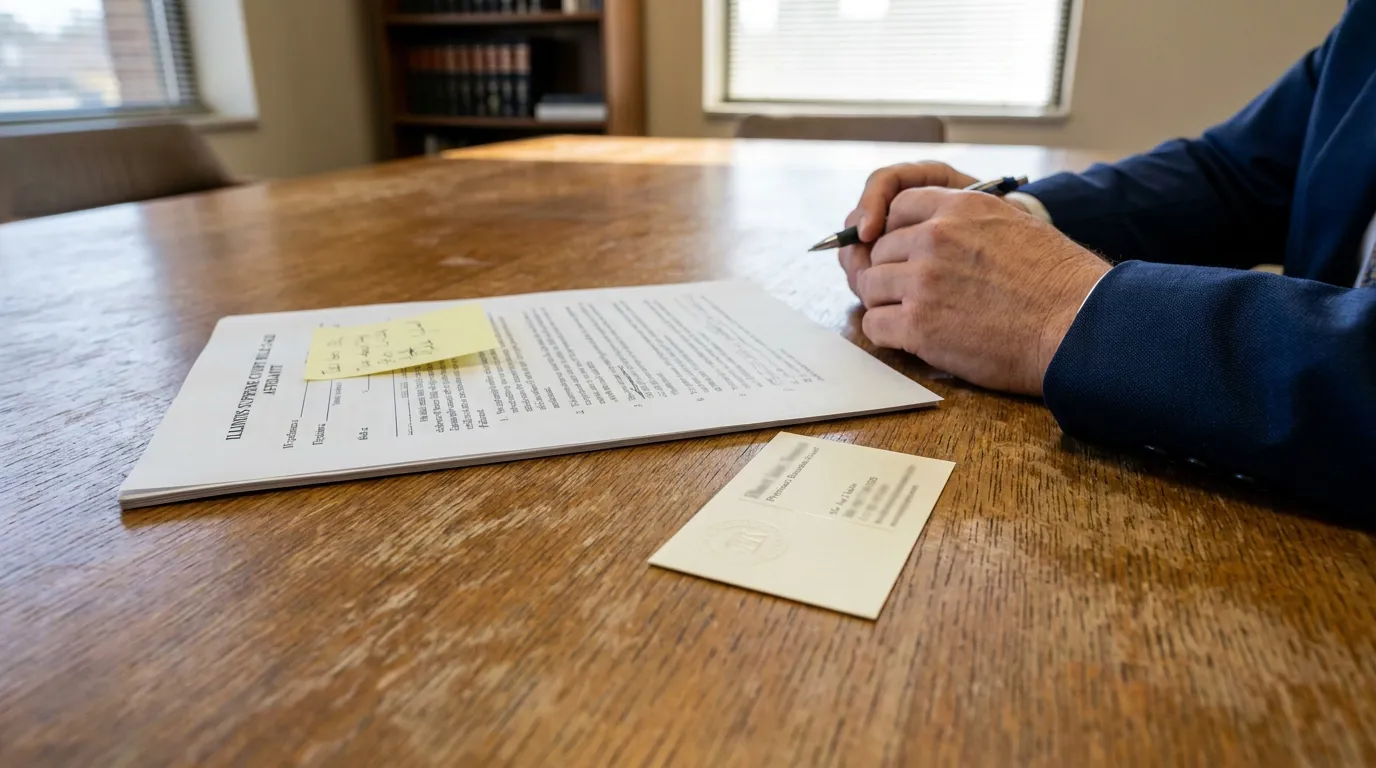
Who Can Author a Report Under 735 ILCS 5/2-622
The reviewing health professional who authors a certificate of merit must meet strict statutory qualifications. Under 735 ilcs 5/2-622, the person writing the report must (i) be knowledgeable in the relevant issues involved in the particular action, (ii) have practiced or taught within the last 6 years in the same area of health care or medicine at issue, and (iii) meet the expert witness standards set forth in 735 ILCS 5/8-2501. These criteria appear in 735 ILCS 5/2-622(a)(1)(i)-(iii). A related statute, 735 ILCS 5/8-2501, separately governs standards for testifying as a standard-of-care expert at trial.
The type of defendant determines who may write the report. When the affidavit concerns a physician who treats human ailments without drugs or surgery, a dentist, a podiatric physician, a psychologist, or a naprapath, the report must come from a health professional licensed in the same profession with the same class of license. For all other defendants, including physicians licensed to practice medicine in all its branches and non-individual defendants such as hospitals, the report generally must come from a physician licensed to practice medicine in all its branches. The affidavit must identify the profession of the reviewing health professional. You can review the full statutory text published by the Illinois General Assembly for the exact language.
💡 Pro Tip: Ask early whether your reviewer’s license class matches the defendant’s. A cardiologist reviewing a podiatry case, for example, may not satisfy the statute’s same-profession rule.
What the Written Report Must Contain
The written report is a separate document that must be attached to the attorney’s affidavit. The affiant, generally the plaintiff’s attorney or a pro se plaintiff, must file an affidavit certifying consultation with a qualifying reviewing health professional in any action seeking damages for medical, hospital, or other healing art malpractice under 735 ILCS 5/2-622(a).
The report itself must identify the plaintiff and explain the basis for the reviewer’s conclusion. Specifically, 735 ILCS 5/2-622(a)(1) requires that the report identify the plaintiff and set out the reasons the reviewing professional found a reasonable and meritorious cause for filing the action. The reviewer’s identifying information may be deleted from the copy attached to the complaint, protecting the professional’s identity while satisfying the statute.
Qualifications Must Be Adequately Stated
A physician’s report should clearly set forth the reviewing physician’s qualifications. Courts have dismissed cases where a report was deficient in stating qualifications and establishing a connection between the plaintiff’s injuries and the defendant’s conduct. In one matter, a trial court found a physician’s report deficient in both respects, then granted leave to file a supplemental report; the plaintiff later filed the physician’s curriculum vitae and an amended report. This illustrates that a technical gap is not always fatal, but it is a serious risk worth avoiding.
One Report for Each Defendant
Every defendant named in the complaint requires a separate certificate and written report. Under 735 ILCS 5/2-622(b), a plaintiff cannot rely on a single report to cover multiple providers with different roles. If a hospital, a surgeon, and an anesthesiologist are all named, each generally needs its own supporting documentation. For a broader explanation of the filing itself, see our overview of the Section 2-622 affidavit.
💡 Pro Tip: When multiple providers may share responsibility, keep organized medical records for each one. A well-documented file makes it easier for a reviewer to prepare defensible, defendant-specific reports.
Why the Statute Exists and What Happens If It Is Ignored
Section 2-622 functions as a screening device to filter out frivolous medical malpractice lawsuits at the pleading stage. The statute requires the affiant to have consulted a qualifying health professional and requires that professional to conclude, in a written report, that a reasonable and meritorious cause exists for filing the action. This ensures that cases entering the court system carry at least a minimum threshold of merit.
Failing to file the required certificate and report can lead to dismissal. Under 735 ILCS 5/2-622(g), the absence of these documents is grounds for dismissal under Section 2-619. That consequence underscores why the statute is treated as a genuine gatekeeping tool rather than a formality. Working with a knowledgeable attorney early can reduce the risk of a preventable dismissal.
| Requirement | Statutory Source | Practical Effect |
|---|---|---|
| Attorney or pro se affidavit | 735 ILCS 5/2-622(a) | Certifies consultation with a qualified reviewer |
| Written report attached | 735 ILCS 5/2-622(a)(1) | Explains reasonable and meritorious cause |
| Reviewer qualifications | 735 ILCS 5/2-622(a)(1)(i)-(iii) | Reviewer must match the area of care |
| Separate report per defendant | 735 ILCS 5/2-622(b) | Each provider needs its own report |
| Consequence of non-compliance | 735 ILCS 5/2-622(g) | Possible dismissal under Section 2-619 |
How Illinois Courts Read the Qualification Rules
Illinois courts generally construe a certificate of merit liberally in favor of the malpractice plaintiff. Reviewing courts have described Section 2-622 as requiring a minimum amount of merit rather than a likelihood of success, and technical deficiencies in a physician’s report are not automatically fatal. In one appellate decision, the court reversed and remanded a dismissal, emphasizing that the statute should reduce frivolous suits without imposing insurmountable hurdles. This plaintiff-friendly lens matters, but it does not excuse an unqualified reviewer.
Physician qualifications remain a distinct and litigable requirement. In the appellate opinion known as Hull v. Southern Illinois Hospital Services, the court explained that Illinois law requires a plaintiff to file an attorney affidavit affirming that a qualified, licensed physician reviewed the case and found a reasonable and meritorious cause for filing. Defendants in that case moved to dismiss on the theory that the reviewing physician failed to meet the requirements. Illinois appellate decisions continue to confirm that the report author’s background must align with the specialty implicated by the alleged negligence.
💡 Pro Tip: Because courts read these reports in your favor but still scrutinize qualifications, choose a reviewer whose recent practice history squarely covers the medical issue in dispute.
Practical Steps to Strengthen Your Certificate of Merit
A well-prepared certificate of merit begins long before the complaint is filed. Consider these general practices when pursuing a medical negligence Illinois matter:
- Preserve complete medical records for every provider involved.
- Identify a reviewing health professional whose license class and recent experience match the care at issue.
- Confirm the report identifies the plaintiff and explains the reasons supporting a meritorious cause.
- Prepare a separate report for each named defendant well ahead of filing deadlines.
Timing is critical, and Illinois filing deadlines are interpreted narrowly. Medical malpractice claims are subject to civil statutes of limitations and a statute of repose, and courts generally apply exceptions such as the discovery rule cautiously. Because these rules can be fact-dependent, it is wise to consult counsel promptly.
Frequently Asked Questions
1. Can my own treating doctor write the 2-622 report?
Possibly, if that doctor meets the statutory qualifications. The reviewing health professional must be knowledgeable in the relevant issues and must have practiced or taught within the last 6 years in the same area of care at issue. Whether your treating physician qualifies depends on the facts.
2. Does each defendant really need a separate report?
Yes, in most cases. Under 735 ILCS 5/2-622(b), a separate certificate and written report is generally required for each defendant named in the complaint.
3. What happens if the report is missing or defective?
A missing or defective filing can lead to dismissal. Under 735 ILCS 5/2-622(g), failure to file the certificate and report is grounds for dismissal, though courts may grant leave to correct certain deficiencies depending on the circumstances.
4. Is the reviewing professional exposed to liability for writing the report?
Generally no, when the report is prepared in good faith. The statute provides civil immunity to a reviewing health professional who in good faith prepares a report used with a 2-622 affidavit.
5. Can a defective report ever be fixed?
Sometimes, subject to the court’s discretion. Under Illinois law, courts may grant leave to file supplemental reports to cure certain technical or substantive deficiencies in a certificate of merit, and outcomes vary based on the court’s discretion. However, fundamental qualification gaps, where the reviewing professional lacks the required statutory license or qualifications, are generally not curable by amendment and can result in dismissal with prejudice.
Protecting Your Illinois Malpractice Claim
Choosing a properly qualified reviewer is one of the most important early decisions in an Illinois medical malpractice case. The affidavit of merit and its supporting report are not mere paperwork; they are the gateway that determines whether a healing art malpractice case may proceed. Because the qualifications, deadlines, and per-defendant requirements can be complex, careful preparation with knowledgeable counsel can make a meaningful difference in preserving your rights.
If you believe you have a case, an experienced 735 ilcs 5/2-622 lawyer at PAUL PADDA LAW can help you evaluate your options. Call us today at 702-366-1888, learn more about our firm and team, or send a message through our secure contact form to take the next step.