
What Insurance Covers a Chicago Rideshare Accident Under Illinois Law?
Understanding Insurance After an Uber or Lyft Crash in Chicago
Key Takeaways: In Chicago, rideshare accident insurance depends on the driver’s "activity phase" under Illinois’ Transportation Network Provider Act. During Period 1 (logged in, no ride accepted), only contingent limits apply ($50,000/$100,000/$25,000). Once a ride is accepted through passenger transport (Periods 2 and 3), a $1,000,000 primary policy applies, plus $50,000 in uninsured/underinsured motorist coverage while a passenger is in the vehicle. Illinois’ modified comparative negligence rule bars recovery if you are more than 50% at fault and reduces awards by your fault percentage. Injured parties have two years to file, and catastrophic cases may recover beyond required coverage. Identifying the activity period and preserving evidence early are key to recovering compensation.
When a rideshare crash happens in Chicago, the insurance that covers you depends on what the driver was doing on the app at the moment of collision. Illinois law ties coverage to the driver’s "activity phase," so protection varies dramatically depending on whether the Uber or Lyft driver was logged in, waiting for a request, or actively transporting a fare.
If you were hurt in a rideshare collision, the team at PAUL PADDA LAW is available to review your situation. Call us at 702-366-1888 for a free consultation, or reach out through our secure contact page to learn how Illinois rideshare insurance rules may apply to your claim.
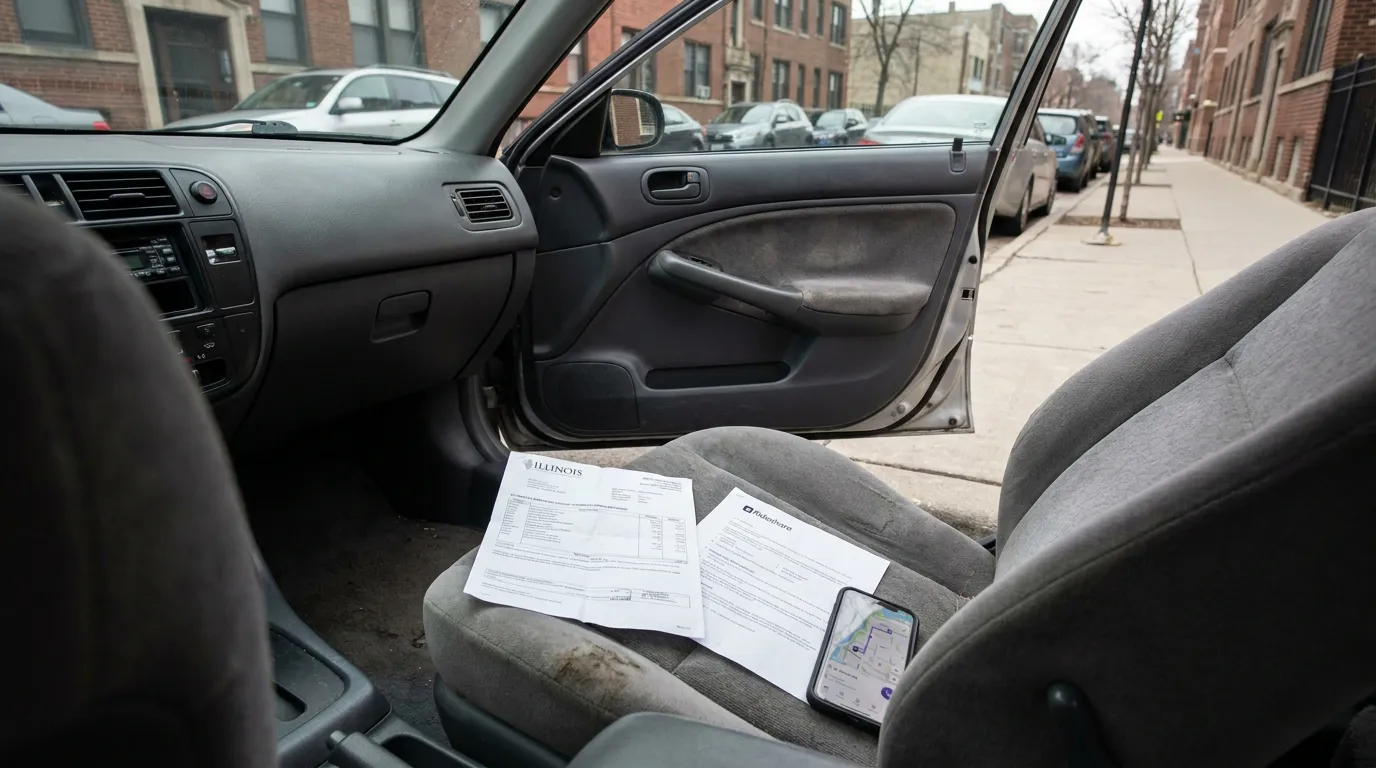
How Illinois Ties Coverage to the Driver’s App Status
Illinois divides rideshare coverage into distinct periods, and the applicable insurance changes as the driver moves through them. The framework comes from the Transportation Network Provider Act, and available coverage can rise dramatically once a ride is accepted.
Under 625 ILCS 57/10(b), during "Period 1," when the driver is logged into the app but has not accepted a ride, lower limits apply: at least $50,000 per person, $100,000 per incident, and $25,000 for property damage. The transportation network company must maintain contingent coverage at these amounts if the driver’s personal policy excludes coverage or falls short. Review the statutory framework through the state’s official text of the Illinois rideshare insurance law.
Once a ride request is accepted, the coverage picture improves substantially. The larger policy kicks in for Periods 2 and 3, the trip to pick up the passenger and the transport itself.
💡 Pro Tip: Screenshot the ride details in your app, including trip status and driver information, as soon as it is safe. This record can help establish which coverage period applied.
The $1,000,000 Policy During an Active Ride
The most robust protection applies from the moment a driver accepts a request until the passenger exits. This is when Illinois requires a substantial primary policy, reflecting the heightened responsibility of transporting paying passengers.
According to 625 ILCS 57/10(c)(1), automobile liability insurance shall be primary and in the amount of $1,000,000 for death, personal injury, and property damage. This coverage can be satisfied by the driver’s policy, the TNC’s policy, or a combination. The timing turns on the statutory definition of TNC services. As 625 ILCS 57/5 explains, TNC services begin when a driver accepts a request through the digital network, continue while transporting the passenger, and end when the passenger exits.
Rideshare passengers also receive uninsured and underinsured motorist protection during the ride. This matters when the at-fault party is a different motorist who carries little or no insurance.
Under 625 ILCS 57/10(c)(2), insurance coverage shall provide uninsured motorist and underinsured motorist coverage in the amount of $50,000 from the moment a passenger enters until the passenger exits the vehicle. For more on how uninsured drivers affect recovery, see our overview of what happens when a driver has no insurance.
Coverage Periods at a Glance
The following table summarizes how TNC insurance coverage generally shifts across the driver’s activity phases. Actual coverage depends on the facts of each case, including the driver’s personal policy status.
| Driver Status | Primary Coverage | UM/UIM |
|---|---|---|
| Logged in, no ride accepted (Period 1) | $50,000/$100,000/$25,000 contingent | Not required at ride-phase level |
| Ride accepted and en route (Period 2) | $1,000,000 primary | $50,000 once passenger enters |
| Transporting passenger (Period 3) | $1,000,000 primary | $50,000 until passenger exits |
Two features of Illinois law make these claims easier to pursue than many expect. First, claimants do not have to wait for a personal insurer to reject a claim. Second, the required coverage carries a defense obligation.
Under 625 ILCS 57/10(c)(3)-(4), the insurer shall have the duty to defend and indemnify the insured, and coverage shall not be dependent on a personal automobile insurance policy first denying a claim. Additionally, 625 ILCS 57/10(d) provides that when a participating TNC driver’s automobile liability insurance has lapsed or ceased to exist, the transportation network company shall provide the required coverage beginning with the first dollar of a claim.
💡 Pro Tip: Do not assume a claim is barred because the driver’s personal policy excludes rideshare activity. The TNC’s contingent coverage may still apply.
How Fault Affects What You Can Recover
Illinois uses a modified comparative negligence standard that can reduce or eliminate recovery based on your share of fault. This rule governs how fault and insurance recovery are apportioned after a rideshare crash.
The controlling authority is 735 ILCS 5/2-1116, under which an injured party can recover damages only if they are not more than 50% at fault, and any recovery is reduced in proportion to their fault share. A party more than 50% at fault is barred from recovering. For example, if you are 20% at fault, you may only recover 80% of your damages. You can read the Illinois Department of Insurance summary of the modified comparative negligence rule for a consumer-friendly explanation.
Fault disputes are common, and they are not always the final word from an insurer. If settlement cannot be reached, courts make the final determination of comparative negligence.
Illinois law also does not cap what a rideshare company may owe beyond its policy limits. This is significant in catastrophic injury cases where damages exceed mandatory coverage.
As 625 ILCS 57/10(e) states, this Section shall not limit the liability of a transportation network company arising out of an automobile crash involving a participating TNC driver in any action for damages for an amount above the required insurance coverage. That said, additional recovery depends heavily on specific facts.
Deadlines That Can Make or Break a Rideshare Claim
Even when strong insurance coverage exists, missing the filing deadline can end a claim before it starts. Illinois sets a general limitations period for personal injury actions, and rideshare crashes are typically governed by that same rule.
Under 735 ILCS 5/13-202, actions for damages for an injury to the person shall be commenced within 2 years next after the cause of action accrued. Certain narrow exceptions, such as discovery rules or tolling provisions, may apply in limited circumstances, but courts generally interpret those exceptions narrowly.
💡 Pro Tip: Calendar your deadline early and gather evidence right away. Waiting near the two-year mark can make it harder to locate witnesses, secure app records, and preserve vehicle data.
How a Chicago Rideshare Accident Lawyer Can Help
A knowledgeable advocate can help identify every layer of coverage that may apply and challenge insurer denials or low offers. Rideshare cases often involve overlapping policies from the driver, the TNC, and sometimes a third-party motorist. A dedicated chicago rideshare accident lawyer can help you document negligence, causation, and damages while establishing the applicable coverage period.
Common challenges include disputes over which period applied and arguments about your share of fault. Insurers may point to a driver’s personal policy exclusion or assert comparative negligence to reduce a payout. Understanding TNC insurance coverage and Illinois rideshare law helps injured people push back on those tactics.
Frequently Asked Questions
-
Does Uber or Lyft insurance cover me if the driver was just waiting for a ride?
Possibly, but at lower limits. During Period 1, 625 ILCS 57/10(b) requires contingent coverage of at least $50,000 per person, $100,000 per incident, and $25,000 for property damage.
-
What if the other driver who hit my rideshare had no insurance?
Uninsured and underinsured motorist coverage may apply during the ride. 625 ILCS 57/10(c)(2) provides $50,000 in UM/UIM coverage from when a passenger enters until they exit the vehicle.
-
Can I still recover if I was partly at fault?
In many cases, yes. Under 735 ILCS 5/2-1116, you may recover damages if you are not more than 50% at fault, with any award reduced by your percentage of fault.
-
How long do I have to file a rideshare injury claim in Illinois?
Generally two years. 735 ILCS 5/13-202 requires that personal injury actions be commenced within 2 years after the cause of action accrued.
-
Can I sue for more than the required insurance limits?
Sometimes, depending on the facts. 625 ILCS 57/10(e) states the law shall not limit a TNC’s liability for an amount above the required insurance coverage.
Protecting Your Recovery After a Rideshare Crash
The insurance that covers a Chicago rideshare accident hinges on the driver’s app status, the fault of each party, and strict filing deadlines under Illinois law. From the contingent Period 1 limits to the $1,000,000 primary policy during an active ride, and from modified comparative negligence to the two-year statute of limitations, each rule can shape what you recover.
If you or a loved one was injured in an Uber or Lyft crash, PAUL PADDA LAW is ready to help you understand your rights. Call 702-366-1888 for a free consultation or contact our team online to discuss how Illinois rideshare insurance coverage may apply to your situation.