
The 2026 Illinois Move Over Law Update: What It Means for Injury Claims
Working or stopped on the side of a busy Illinois highway is a terrifying experience. When cars and commercial semi-trucks are flying past at 70 miles per hour on the Dan Ryan Expressway (I-90/94) or the Eisenhower (I-290), tow truck operators, road workers, first responders, and stranded motorists rely entirely on other drivers to pay attention and give them space. Unfortunately, distracted and reckless drivers often fail to do so, leading to catastrophic roadside collisions.
To strengthen protections for the people most exposed in these situations, Illinois updated its traffic safety statutes. Effective January 1, 2026, the Illinois Move Over Law, commonly known as Scott’s Law, was officially expanded under Public Act 104-0400. The updated law now requires drivers to slow down and yield to emergency vehicles displaying flashing lights whether the vehicle is stationary or moving, and it expressly extends protection to emergency workers and pedestrians at an emergency scene.
For victims of roadside crashes, this legal update is significant. From a personal injury perspective, a driver’s failure to move over for a covered vehicle or worker provides concrete evidence of negligence. We want to explain what the updated law actually covers and what it means for your recovery process.
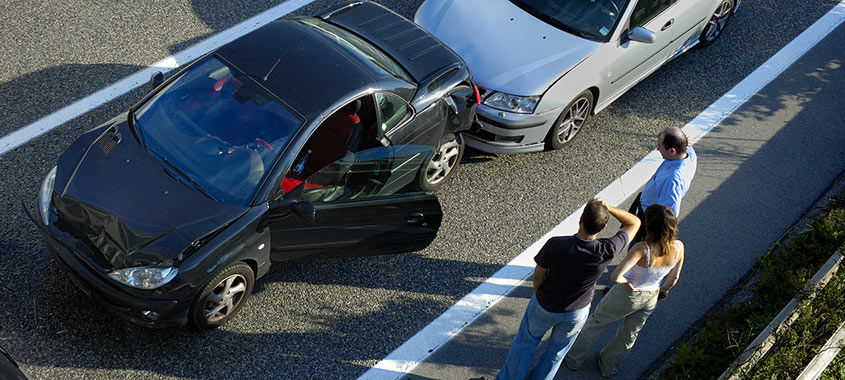
Understanding the 2026 Expansion of Scott’s Law
Scott’s Law was originally enacted to protect the law enforcement officers, firefighters, paramedics, road crews, and tow truck drivers working on or near the shoulders of Illinois roadways. It is named after Chicago Fire Department Lieutenant Scott Gillen, who was killed by an intoxicated driver in 2000 while responding to an accident.
Over the years, lawmakers recognized gaps in the law that left covered workers and responders exposed in additional scenarios. The 2026 Illinois Move Over Law update closes some of those gaps by expanding when the duty applies.
The legal requirements for approaching drivers under the Illinois Vehicle Code (625 ILCS 5/11-907) include:
- Reducing speed significantly to maintain a safe distance.
- Yielding the right-of-way by changing lanes away from the vehicle or scene if it is safe to do so.
- Proceeding with extreme caution if heavy traffic makes a lane change impossible.
What the 2026 Update Actually Changed
Before the update, Scott’s Law primarily required drivers to slow down and move over for stationary authorized emergency vehicles displaying their lights. Effective January 1, 2026, the law:
- Applies to emergency vehicles displaying flashing lights whether they are stationary or in motion.
- Expressly requires drivers to yield to emergency workers and pedestrians involved in an emergency scene.
Vehicles that legally display the lights covered by this statute include police, fire, ambulance, tow trucks, highway maintenance, and construction vehicles, among others. Importantly, Scott’s Law does not extend the same statutory duty to ordinary passenger vehicles simply because their hazard lights are on, drivers still owe a general duty of care under Illinois law to anyone stopped on the shoulder, but the specific statutory penalties and presumptions of Scott’s Law apply to covered emergency vehicles, workers, and scenes.
The Devastating Consequences of Roadside Accidents
Chicago highways are notorious for heavy congestion, aggressive driving, and incredibly narrow shoulders. The Dan Ryan Expressway (I-90/94 through Chicago) is a particularly dangerous corridor for tow operators, troopers, and road workers. When an inattentive driver fails to slow and move over, the people working on the shoulder are sitting in a highly vulnerable position.
High Speeds and Heavy Traffic Create a Dangerous Mix
Roadside auto accidents on interstates rarely result in minor fender benders. The speed differential between a stationary or slow-moving vehicle on the shoulder and a car traveling at highway speeds is massive. When a moving vehicle strikes a stopped emergency vehicle, work truck, or worker, the sheer force of impact often produces catastrophic injuries.
Victims of these crashes often suffer severe trauma. Common injuries include traumatic brain injuries, spinal cord damage, crushed limbs, and severe whiplash. The physical recovery is agonizing, and the financial burden of emergency medical bills and lost wages can overwhelm a family in a matter of days.
How a Move Over Law Violation Helps Prove Negligence
To win a personal injury case, you must prove that the other driver was negligent, that they owed you a duty of care, breached that duty, and caused your injuries. Proving negligence can be a battle of evidence, accident reconstruction, and witness statements.
The 2026 Illinois Move Over Law update strengthens the evidentiary picture in cases that fall within the law’s scope. Under Illinois law, violation of a public-safety statute that was designed to prevent the kind of harm that occurred is treated as prima facie evidence of negligence, meaning the violation is powerful proof of breach, though juries still weigh it alongside other facts. (Illinois courts generally do not apply pure “negligence per se” the way some other states do.)
Establishing Fault Through a Statutory Violation
When the law explicitly requires drivers to slow down and change lanes for covered emergency vehicles, workers, and scenes, failing to do so is a direct violation of state law. If the at-fault driver is ticketed for a Scott’s Law violation after a crash, establishing liability becomes much more straightforward. The police report, crash scene photos, and the citation itself serve as strong evidence that the driver broke the law.
Insurance companies know what this means. When confronted with clear evidence of a Move Over Law violation, defense adjusters have less room to argue contributory fault. Strong statutory evidence often forces them to take the claim seriously and can lead to higher, more just settlement offers.
Your Legal Options After a Roadside Collision
Surviving a roadside crash is only the first hurdle. The days and weeks that follow are filled with physical pain, insurance adjusters calling constantly, and mounting financial anxiety. You do not have to handle this heavy burden alone.
By pursuing a personal injury claim, you can seek compensation to make yourself whole again. A successful claim can recover damages for:
- Past and future medical expenses related to your crash injuries.
- Lost wages if you are unable to return to work.
- Diminished earning capacity if your injuries cause permanent disability.
- Physical pain and emotional suffering caused by the trauma.
- Property damage to your vehicle.
We approach these cases systematically. We secure the police report, gather traffic camera footage from the Dan Ryan and other corridors, and interview witnesses. We build a comprehensive case that highlights the other driver’s blatant disregard for the law.
Securing Compensation for Out-of-State Visitors from Las Vegas
Many Las Vegas residents frequently travel to Chicago for conventions, family visits, or business. If you are an out-of-state driver involved in a Chicago interstate crash, dealing with a cross-country injury claim can feel overwhelming. You need a legal team that operates in both jurisdictions and understands how to handle interstate insurance policies. Because our firm practices in both Las Vegas and Chicago, we can seamlessly manage your case while you recover safely at home in Nevada.
What to Do Immediately After a Roadside Accident
If you are involved in a collision while stopped on the shoulder, your health and safety are the top priorities. The actions you take in the immediate aftermath can also protect your future legal claim.
Follow these critical steps if you are hit on the side of the highway:
- Stay in your vehicle with your seatbelt fastened if it is safe to do so. Walking on an active highway is incredibly dangerous.
- Call 911 immediately to request medical assistance and police presence.
- Tell the responding officer clearly what lights or signals were active before the impact occurred.
- Seek emergency medical attention, even if you feel your injuries are minor. Adrenaline can mask serious internal trauma.
- Refuse to provide a recorded statement to the other driver’s insurance company until you speak with legal counsel.
Frequently Asked Questions About the Illinois Move Over Law
Who is covered by Scott’s Law as of January 1, 2026?
The law applies to authorized emergency vehicles (such as police, fire, ambulance, tow trucks, highway maintenance, and construction vehicles) displaying flashing lights, whether stationary or moving. As of January 1, 2026, the statute also expressly requires drivers to yield to emergency workers and pedestrians involved in an emergency scene.
Does the law apply to a regular passenger car with its hazard lights on?
Scott’s Law’s specific statutory penalties and duties target authorized emergency vehicles, workers, and emergency scenes, not ordinary passenger vehicles simply because their hazards are on. That said, every Illinois driver still owes a general duty of reasonable care to others on the road, including stranded motorists. If you were hit while stopped on the shoulder, you may still have a strong negligence claim even if Scott’s Law doesn’t directly apply.
What happens if the other driver could not change lanes due to traffic?
The law accounts for heavy traffic conditions. If an approaching driver cannot safely change lanes, they are still legally required to reduce speed significantly and proceed with extreme caution. Striking a stationary vehicle or worker is strong evidence that the driver failed to reduce speed appropriately.
Can I still recover compensation if my car was partially sticking out into the lane?
Illinois follows a modified comparative negligence rule. Even if you were partially at fault for how your vehicle was parked, you can still recover compensation as long as you were not more than 50 percent responsible for the crash (your damages are reduced by your percentage of fault). The other driver’s failure to move over or maintain proper lookout can carry significant weight in determining overall fault.
We Are Here to Help Protect Your Rights
Dealing with the aftermath of a highway accident is incredibly stressful. You are likely facing painful injuries, an unpredictable recovery timeline, and aggressive phone calls from insurance adjusters. We deeply understand the physical and emotional toll this takes on you and your family.
At Paul Padda Law, we believe in holding reckless drivers accountable. We know how to use the 2026 Illinois Move Over Law update to build a strong, evidence-based case on your behalf. Our goal is to handle all the legal complexities so you can focus entirely on your healing and recovery.
If you or a loved one were injured in a roadside accident, please reach out to us. We offer a calm, supportive environment to discuss your situation and explore your options. Call our Chicago office at (312) 702-7000 to speak with our team. Getting advice early helps preserve crucial evidence, so please feel free to call us whenever you are ready.