
How to Document Evidence at a Chicago Car Accident Scene in Illinois
Turning a Chaotic Crash Into a Documented Case
Key Takeaways: Documenting evidence at a Chicago car accident scene means capturing photographs and video of vehicle damage, skid marks, and traffic signals, collecting witness contacts, recording driver and vehicle details, noting environmental conditions, and photographing your injuries followed by prompt medical care. Because Illinois follows modified comparative negligence, fault assigned to you reduces your recovery and bars it entirely if you are more than 50% at fault, so a strong scene record helps limit the blame an insurer can shift onto you. The defendant generally carries the burden of proving your contributory negligence, and contemporaneous proof gives you material to rebut fault-shifting arguments. Always gather evidence from a lawful, safe location, and preserve everything in one backed-up place. Act quickly, since claims against government entities like the CTA, local public bodies, or the State of Illinois carry strict one-year deadlines.
Knowing how to preserve proof at a wreck can shape everything that follows. The moments after a collision are stressful, but the evidence you gather at the roadside often becomes the backbone of any injury claim. Clear photos, witness contacts, and notes about road conditions help establish who was negligent and how badly you were hurt. This guide explains how injured drivers, passengers, and pedestrians in Illinois can protect their rights by building a strong record before evidence disappears.
If you or a loved one were recently hurt in a crash, timely guidance can make a real difference. The team at PAUL PADDA LAW offers free, confidential consultations to injured people across Illinois. Call us at 702-366-1888 or reach out through our secure contact page to discuss your situation and understand your options.
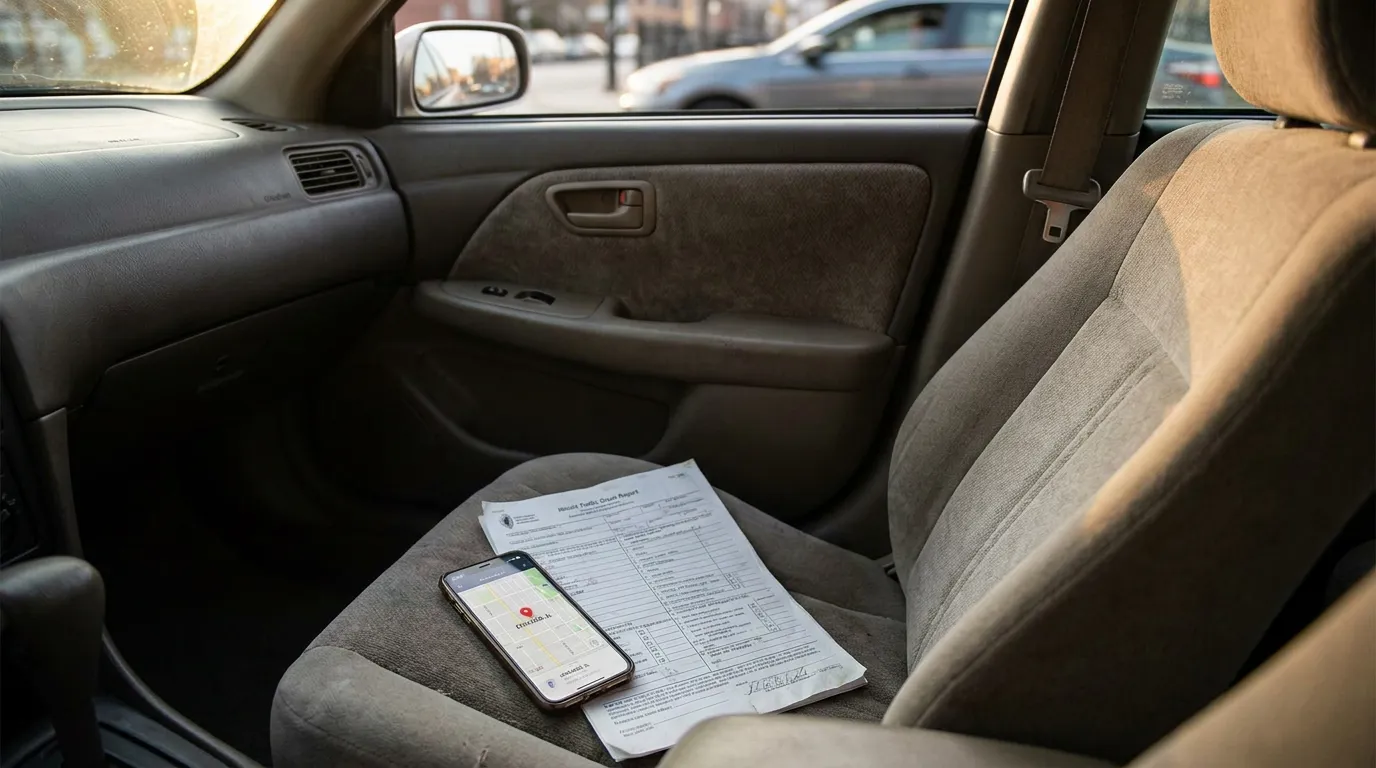
Why Roadside Evidence Carries So Much Weight
Documentation matters because Illinois resolves fault by comparing the conduct of everyone involved. Illinois follows modified comparative negligence under 735 ILCS 5/2-1116, which bars recovery when a plaintiff is more than 50% at fault and otherwise diminishes damages in proportion to the plaintiff’s share of fault. The fault assigned to you directly reduces what you can collect and can eliminate your recovery entirely if it exceeds 50%, which is why the record you create at the scene is so valuable.
A simple percentage can translate into thousands of dollars. Under comparative principles, damages shrink in proportion to each party’s share of blame. If a court assigns 60% fault to the defendant and 40% to the plaintiff, the plaintiff recovers only 60% of damages. You can review these rules through the Cornell overview of comparative fault principles, which shows why minimizing the blame pinned on you is so important.
The burden of proving your fault generally rests with the other side. A 1985 amendment to 735 ILCS 5/2-613(d) places on the defendant the burden of pleading contributory negligence, and Casey v. Baseden held that the defendant carries the burden of proof on that issue. Strong, contemporaneous documentation gives you material to rebut fault-shifting arguments that an insurer may later raise.
💡 Pro Tip: Save everything in one place. Create a dedicated folder on your phone the day of the crash and back it up to the cloud so photos, notes, and contacts are never lost if your device is damaged.
What To Do After a Car Accident in Chicago at the Scene
Knowing what to do after a car accident in Chicago starts with safety, then shifts to systematic evidence collection. Once you have checked for injuries and moved to a secure spot, your goal is to capture the scene before vehicles are towed and conditions change. The list below outlines the core categories of proof most injury claims rely on.
- Photographs and video of vehicle damage, debris fields, skid marks, traffic signals, and the overall accident scene in Illinois.
- Witness information, including names, phone numbers, and a brief note about what each person saw.
- Driver and vehicle details, such as license plates, insurance cards, and the make and model of every car.
- Environmental conditions, including weather, lighting, and any obstructed signs.
- Your own injuries, photographed early and documented through prompt medical care.
Photographs deserve special attention because Illinois law recognizes recorded images as admissible proof. Under statutes governing automated enforcement, photographs or recorded images evidencing violations are admissible in proceedings, a principle you can explore in the state’s compilation of vehicle photo enforcement rules. Clear Chicago accident photos can help document what words alone cannot.
Where you stop to gather evidence should always be lawful and safe. Illinois restricts stopping in certain high-traffic corridors, including within a one-half mile radius of the O’Hare eastern entrance and the I-90/I-294 intersection. Documenting a crash never requires putting yourself in danger, so move to a protected location before taking photos.
💡 Pro Tip: Photograph the same detail from several distances. A wide shot establishes context, a mid shot shows position, and a close shot captures specifics like a dented panel or a broken taillight.
Building the Human Record: Witnesses and Injuries
Witness accounts and medical documentation connect the crash to your damages. Illinois negligence claims rest on duty, breach of ordinary care, causation, and damages, and scene evidence supports every link in that chain.
Capturing Witness Statements Effectively
Independent witnesses often carry more persuasive value than the drivers themselves. Ask bystanders what they saw while memories are fresh, and record their contact details in case they need to be reached later. A neutral observer who confirms a red-light violation or an unsafe lane change can be pivotal in Chicago crash documentation.
Documenting Injuries and Medical Care
Prompt medical evaluation both protects your health and ties your injuries to the collision. Gaps in treatment can give an insurer room to argue that your harm came from something else. Keeping records of every visit, diagnosis, and expense helps substantiate an Illinois injury claim and demonstrates the seriousness of what you experienced.
💡 Pro Tip: Write a short narrative of the crash within 24 hours while details are vivid. Note the sequence of events, the direction of travel, and anything the other driver said at the scene.
Deadlines That Can Affect Your Illinois Car Accident Claim
Preserving evidence is only useful if you act within the applicable filing deadlines. Illinois recognizes different limitation periods depending on who caused your injuries, and some are dramatically shorter than others. The table below summarizes several deadlines relevant to Illinois crash evidence and injury claims.
| Type of Defendant | General Deadline | Authority |
|---|---|---|
| Local public entity | 1 year | 745 ILCS 10/8-101 |
| State of Illinois | 1 year | 705 ILCS 505/22-1 |
| Chicago Transit Authority | 1 year | 70 ILCS 3605/41 |
Claims involving government defendants face especially tight windows. Injury claims against local public entities in Illinois generally carry a strict one-year limitation under 745 ILCS 10/8-101. If your crash involved a city vehicle or public property, that compressed timeframe reinforces the need to document quickly and consult counsel promptly.
Transit-related collisions follow their own rules. Accidents involving the Chicago Transit Authority carry a one-year deadline under 70 ILCS 3605/41. These administrative and statutory deadlines are interpreted narrowly and are separate from an ordinary civil lawsuit against a private driver.
Claims against the State of Illinois require specific, detailed filings. Under 705 ILCS 505/22-1, claimants must file a notice, in the office of the Attorney General and the office of the Clerk of the Court of Claims, containing the name and residence of the injured person, the date, time, and place of the accident, a brief description of the accident, and the name of the attending physician, if any. This shows why accurate scene documentation supports a later claim.
Special rules may apply when the injured person is a child. For minors, the limitations period is generally tolled until the disability, including minority age, has been removed. Courts interpret tolling exceptions narrowly, so this protection applies in limited circumstances and should not be assumed to extend any deadline automatically.
💡 Pro Tip: Do not wait for a deadline to approach before seeking guidance. Because government-related claims can expire in as little as one year, an early conversation with counsel helps protect your options.
How Legal Guidance Strengthens Your Documentation
A knowledgeable advocate can turn raw evidence into a persuasive claim. After you gather photos and witness details, an attorney can help preserve additional proof such as surveillance footage, vehicle data, and police reports before they are lost. Our discussion of what evidence is needed to prove fault explains how these pieces fit together.
Experienced counsel also helps you respond to insurer tactics and complex fault questions. Having a dedicated car accident lawyer in Chicago review your evidence early can help you avoid missteps that reduce a recovery.
Frequently Asked Questions
1. What is the single most important thing to photograph after a crash?
Vehicle positions and the overall accident scene in Illinois are often the most valuable. Capturing where each car came to rest, along with skid marks and traffic controls, helps reconstruct how the collision occurred before anything is moved.
2. Does my own fault prevent me from recovering damages in Illinois?
Not automatically, because Illinois applies modified comparative negligence. Your recovery is reduced in proportion to your share of fault and is barred entirely only if you are more than 50% at fault, so thorough documentation helps limit the percentage of blame assigned to you.
3. How long do I have to file a car accident claim in Illinois?
It depends on who is responsible. Claims against many government entities generally must be pursued within one year, while other claims follow different periods. Because these deadlines are applied strictly, confirming the one that governs your case early is wise.
4. What if the other driver disputes what happened?
Independent evidence becomes decisive when accounts conflict. Witness statements, photographs, and physical evidence can corroborate your version, and the defendant generally bears the burden of proving that you were partly at fault.
5. Should I still document evidence if I feel fine after the crash?
Yes, because some injuries appear hours or days later. Preserving Illinois crash evidence and seeking a prompt medical evaluation protects both your health and your ability to connect any delayed symptoms to the collision.
Protecting Your Recovery Starts at the Roadside
Careful documentation is one of the most powerful steps an injured person can take after a collision. By capturing photographs, gathering witness details, recording conditions, and seeking prompt medical care, you build a factual record that supports negligence, causation, and damages. Because Illinois reduces recovery by your share of fault and enforces tight deadlines for many claims, knowing what to do after a car accident in Chicago can meaningfully protect your rights.
When you are ready to discuss your crash with a compassionate legal team, help is available. Contact PAUL PADDA LAW for a free consultation, call us directly at 702-366-1888, or send us a message through our online contact form to learn how we can help you pursue the compensation you deserve.