
How Nevada’s Modified Comparative Negligence Law Affects Your Settlement
In the aftermath of a car accident, slip and fall, or workplace injury in Las Vegas, you might find yourself wondering who is truly to blame. Sometimes, an accident is entirely one person’s fault. In many real-world situations, however, multiple people share the blame. For example, you might have been driving slightly above the speed limit when a drunk driver ran a red light and hit you.
When both parties share responsibility for an accident, resolving a personal injury claim becomes more complicated. Many injured victims mistakenly believe that if they contributed to their accident in any way, they forfeit their right to financial compensation. Fortunately, this is not true in Nevada. Understanding how Nevada’s modified comparative negligence law works is the key to protecting your rights and securing the settlement you deserve.
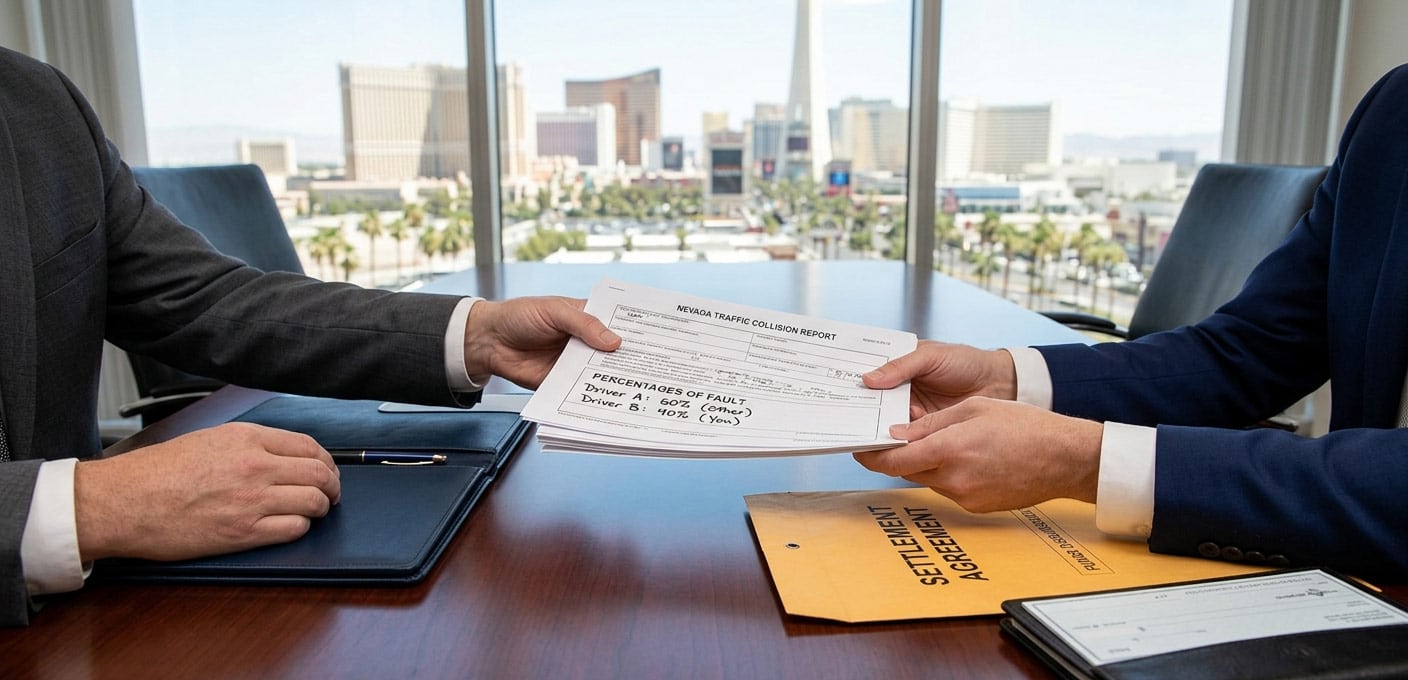
Understanding Nevada Shared Fault Rules
Every state handles shared fault differently. A few states follow a harsh system called contributory negligence. In those jurisdictions, if you are found to be even one percent at fault for an accident, you are completely barred from recovering any money. Other states use pure comparative negligence, which allows you to recover damages even if you are 99 percent at fault.
Nevada strikes a balance between these two extremes. The state operates under a system known as modified comparative negligence. This legal framework ensures that injured parties can seek justice and recover compensation, but it also holds everyone accountable for their own careless actions. Under this system, your ability to secure a settlement depends entirely on the specific percentage of fault assigned to you.
The 51 Percent Bar Rule Explained
The foundation of shared fault in the state is found in Nevada Revised Statutes 41.141. This law establishes the 51 percent bar rule. Simply put, you can recover damages in a personal injury lawsuit as long as your negligence was not greater than the negligence of the other parties involved.
If a jury or an insurance adjuster determines that you are 50 percent or less at fault, you are eligible for financial compensation. However, if you are found to be 51 percent or more at fault for the incident, you are entirely barred from recovering any monetary damages. Crossing that 51 percent threshold means you will be financially responsible for your own medical bills, lost wages, and property damage.
How Your Settlement Changes Based on Fault
If you stay under the 51 percent threshold, you can still win your case. Your final settlement amount, however, will be reduced in direct proportion to your assigned percentage of blame. The court or the insurance company will calculate your total damages and then subtract your share of the fault.
Example 1: You are 20 Percent at Fault
Imagine you are involved in a collision at a busy Las Vegas intersection. The other driver failed to yield, but you were distracted by your phone for a brief moment. Your total damages, including hospital bills and lost income, amount to $100,000. The insurance company determines that the other driver is 80 percent at fault, and you are 20 percent at fault. Your final settlement will be reduced by 20 percent. You will walk away with $80,000.
Example 2: You are 51 Percent at Fault
Now, imagine you slip and fall in a casino lobby. The floor was wet and lacked a warning sign, but you were running through the lobby while intoxicated. If a jury decides your reckless behavior makes you 51 percent responsible for the fall, the law completely blocks your recovery. Even if your medical bills exceed $100,000, you will receive zero compensation.
Tactics Insurance Companies Use to Shift the Blame
Insurance companies are well aware of the 51 percent rule in Nevada. Adjusters use this law strategically to protect their profit margins. Their primary goal is to shift as much blame onto you as possible. Every single percentage point of fault they can assign to you is money they get to keep in their pockets.
Insurance adjusters might seem friendly on the phone, but their objective is not to help you maximize your settlement. They are trained negotiators who know how to ask leading questions. If they call you shortly after the accident, they are hoping to catch you off guard before you have spoken to an attorney. A simple statement like admitting you did not see the other car coming can be twisted into an admission that you were not paying attention to the road.
Adjusters will scrutinize police reports, hunt for inconsistencies in your recorded statements, and analyze your medical records. They will often argue that you were distracted, speeding, wearing inappropriate footwear for the conditions, or failing to pay attention to your surroundings. They know that if they can push your fault to 51 percent, they will not have to pay you a single dime.
What to Do to Protect Your Injury Claim
Because your percentage of fault directly dictates your financial recovery, you must take active steps to protect your claim from day one. Gathering strong evidence is the only way to combat the insurance company’s attempts to unfairly assign blame to you. The steps you take in the moments right after your accident are crucial.
- Call law enforcement immediately so an official police report can be generated.
- Demand that a manager fill out an official incident report if you slip and fall while at a business.
- Never admit fault or apologize at the scene of the accident.
- Take extensive photographs of the accident scene, your injuries, and any property damage.
- Collect the names and contact information of all eyewitnesses before they leave the area.
- Seek medical attention right away to create a clear timeline for your injuries.
- Do not provide a recorded statement to the other party’s insurance adjuster without legal guidance.
Frequently Asked Questions About Comparative Negligence
Who decides my percentage of fault?
If your case goes to trial, a judge or jury will listen to all the evidence and assign a specific percentage of fault to each party. If your case is settled out of court, your attorney and the insurance adjuster will negotiate and agree upon the fault percentages based on the available evidence.
Does the modified comparative negligence rule apply to all personal injury cases?
Nevada applies the modified comparative negligence rule to nearly all personal injury cases, including car crashes, truck accidents, motorcycle collisions, slip and fall incidents, and premises liability claims. However, this rule typically does not apply to cases involving intentional misconduct or strict product liability.
What happens if multiple defendants are at fault for my injuries?
Nevada law allows you to recover damages as long as your total fault is not greater than the combined fault of all defendants. If you are 10 percent at fault, Driver A is 60 percent at fault, and Driver B is 30 percent at fault, you can still recover compensation. Each defendant is generally responsible for paying a portion of your damages equal to their specific percentage of fault. This legal concept is known as several liability. In this scenario, Driver A would pay 60 percent of your total damages, and Driver B would pay 30 percent.
Secure the Representation You Deserve
Dealing with a severe injury is overwhelming on its own. When an insurance company tries to unfairly blame you for the accident, the situation becomes incredibly frustrating. You do not have to fight these aggressive tactics by yourself. Having a knowledgeable advocate in your corner ensures that fault is assigned fairly and accurately based on the facts.
At Paul Padda Law, we understand how stressful it is to navigate the legal system while you are trying to heal. We review the evidence meticulously, build a strong strategy, and handle the insurance companies so you can focus on your physical recovery. Taking early action is the most effective way to protect your rights and preserve vital evidence. If you have questions about your situation or how shared fault might impact your settlement, please contact our team today at 702-707-7000.