
Can Dashcam Footage Be Used as Evidence in an Illinois Crash Case?
Why Video Evidence Can Make or Break an Illinois Crash Claim
Key Takeaways: Yes, dashcam footage can be used as evidence in an Illinois crash case because the state has no exclusionary rule barring recordings captured on public roadways. Illinois courts recognize timestamped visual proof, and admissibility turns on relevance, authentication, and reliability rather than special permission. Embedded metadata like time, date, and location strengthen claims. Since Illinois follows modified comparative negligence under 735 ILCS 5/2-1116, allowing recovery only when a plaintiff is 50% or less at fault and reducing damages by that percentage, clear video can keep a victim’s fault low and protect the claim’s value. Dashcam video often becomes the deciding factor in allocating fault, especially when adjusters rely on conflicting statements, and works best alongside police reports, medical records, and physical evidence. To preserve this evidence, back up the original, unedited file with metadata immediately, as many devices overwrite footage automatically. Consulting a knowledgeable attorney is the best way to evaluate how dashcam admissibility applies to your situation.
Yes, dashcam footage can generally be used as evidence in an Illinois crash case, and it often becomes one of the most persuasive pieces of proof available. Illinois law contains no exclusionary rule blocking dashcam recordings captured from public roadways, meaning such footage is generally eligible for admission in civil lawsuits, subject to standard evidentiary requirements. When the other side disputes what happened, timestamped video can corroborate the victim’s account, contradict an at-fault driver’s story, and help accurately assign fault rather than letting the insurer inflate the victim’s share of blame.
If you were recently injured and have video of your crash, the team at PAUL PADDA LAW can help you understand how that evidence fits into your claim. Call 702-366-1888 for a free consultation or reach out through the firm’s online contact page to discuss your options.
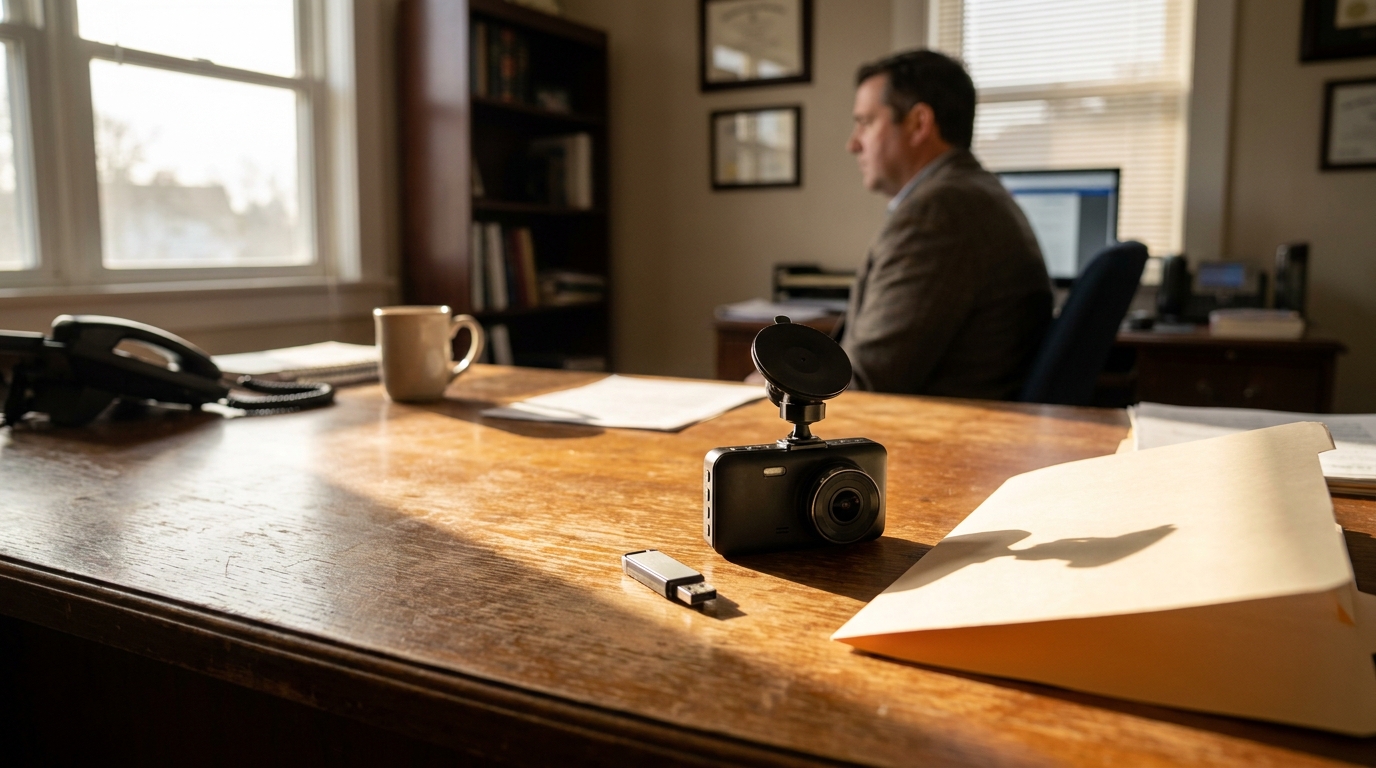
How Illinois Treats Recorded Video as Evidence
Illinois courts have repeatedly recognized that recorded visual evidence belongs in the courtroom when it helps establish case facts. While most statutory provisions on recorded images address automated traffic systems, they reflect a broader principle: photographs and recorded images connected to vehicle violations are admissible. Under 625 ILCS 7/1, Section 40, except as provided in Section 45, any photograph or other recorded image evidencing a violation of Section 11-605.1 of the Illinois Vehicle Code (speeding in highway construction or maintenance zones) is admissible in any proceeding resulting from the issuance of the Uniform Traffic Citation; however, such images are confidential and available only to the defendant and governmental or law enforcement agencies for adjudicating the driving violation. Illinois courts admit timestamped visual proof, including privately owned dashcam footage, in civil crash cases under ordinary evidentiary principles of relevance and authentication.
Appellate decisions reinforce this point. In a recent Illinois appellate matter, security cameras inside a taxi captured still images and video clips recovered from an encrypted hard drive and published to the jury, even though the footage alone could not definitively identify the defendant. That outcome, discussed in a 2026 First District ruling on in-vehicle camera evidence, illustrates that video can be admitted when it sheds light on disputed events. The same reasoning supports dashcam footage in civil litigation.
💡 Pro Tip: Save the original, unedited video file and avoid trimming or filtering it. Preserving the native file with embedded metadata helps protect against authenticity challenges.
What Makes Dashcam Footage Admissible in Illinois
Admissibility turns on relevance, authentication, and reliability rather than special permission. A party offering dashcam evidence must show the recording fairly and accurately depicts what it claims to show. Illinois law recognizes that machine-generated data, including camera footage, generally falls outside the hearsay rule, meaning such recordings can typically be admitted without the testimony of whoever operated the equipment, provided proper foundation is laid.
Metadata strengthens these arguments considerably. Illinois statutes governing automated traffic control systems in highway construction or maintenance zones require recorded images to display time, date, and location under Section 30 of the Automated Traffic Control Systems in Highway Construction or Maintenance Zones Act (625 ILCS 7/). Under Section 40 of the same Act, such recorded images may be admissible in proceedings resulting from the issuance of a Uniform Traffic Citation. The O’Hare Driver Safety Act (625 ILCS 80/), Section 20, requires a clear recorded image of the vehicle and its license plate and also requires the recorded image to display the time, date, and location of the violation; Section 20 contains no admissibility provision or subsections. Though the automated enforcement provisions apply to government systems, these statutes illustrate why video evidence carries weight: a dashcam capturing time, date, and location provides verifiable detail supporting admissibility. Claimants should ensure footage retains these markers.
Understanding the contrast with government-operated cameras matters. Recorded images from automated enforcement systems face tight statutory limits on access and use. Under 625 ILCS 7/1, Section 25(d), such photographs may only be used as evidence for the specific violation and are available to a narrow group including the vehicle owner, offender and attorney, judiciary, State’s Attorney, and law enforcement. Privately owned dashcams generally face fewer restrictions, though captured audio can raise separate concerns under the Illinois eavesdropping statute.
💡 Pro Tip: Note your dashcam’s make and model and storage duration. Many devices overwrite older recordings automatically, so download and back up relevant clips immediately after a crash.
Proving Fault With Digital Evidence in a Car Crash
Dashcam video frequently becomes the deciding factor in fault allocation. Insurance companies interview parties and witnesses and review accident reports to determine settlement offers, and clear video can supplement or clarify that process. When an adjuster’s determination rests on conflicting statements, digital evidence can shift the analysis by showing the actual sequence of events.
Video also fills gaps other evidence leaves open. Skid marks, vehicle damage, and witness memories tell part of the story but are open to interpretation. To understand building a strong claim, review what types of evidence are needed to prove fault in a Chicago collision, because dashcam recordings work best alongside police reports, medical records, and physical evidence rather than in isolation.
Lay witnesses may help interpret what video shows. Under Illinois Rule of Evidence 701, lay witnesses, including law enforcement officers, may offer opinion testimony identifying persons or objects in surveillance footage where the witness is more likely than the jury to correctly make the identification, though special procedures apply to law enforcement witnesses. This matters because the value of video proof often depends on who can explain it and how.
💡 Pro Tip: Do not post crash footage on social media before speaking with a lawyer. Public posts can be taken out of context and may complicate how footage is used in negotiations or litigation.
Illinois Car Accident Laws and Comparative Fault
Illinois follows a modified comparative negligence standard that makes fault allocation the heart of most crash claims. Under 735 ILCS 5/2-1116, an injured party may recover damages only if found 50% or less at fault, and a plaintiff is barred from recovering if contributory fault exceeds 50% of the proximate cause. Review the controlling text on Illinois comparative negligence rules to see how the threshold operates. Because illinois car accident laws tie recovery directly to fault percentages, even a few points can change a case significantly.
The statute reduces damages proportionally to the plaintiff’s fault. When a plaintiff is 50% or less at fault, damages are diminished proportionally. This is why proving fault with dashcam footage carries such practical weight: clear recording can keep a victim’s fault percentage low and protect the claim’s value. In wrongful death matters, 740 ILCS 180/0.01, Section 2 similarly directs the trier of fact to determine contributory fault and bars recovery where a beneficiary’s fault exceeds 50%.
| Plaintiff’s Fault | Effect Under 735 ILCS 5/2-1116 |
|---|---|
| 50% or less | Recovery allowed, damages reduced by fault percentage |
| More than 50% | Barred from recovering damages |
Timing shapes whether your evidence reaches a courtroom. Illinois courts generally interpret filing deadline exceptions narrowly, and they do not apply automatically. Civil filing deadlines are distinct from any insurer’s internal claim timelines, so preserving footage early avoids unnecessary risk.
Practical Steps for Preserving Your Footage
Acting quickly to secure your recording protects both the evidence and your legal options. Dashcams and connected apps often overwrite data, and damaged devices may lose files entirely. Taking organized steps early can make the difference between usable evidence and lost opportunity.
- Back up the original video file to a secure location and keep a duplicate.
- Write down the date, time, and location while your memory is fresh.
- Photograph the dashcam’s position and the scene before vehicles are moved.
- Preserve any companion app data, GPS logs, or audio that accompanies the clip.
Whether dashcam footage helps your case depends on specific facts. Authentication challenges, privacy questions, and device reliability can all affect admissibility, and outcomes vary. Working with a knowledgeable car accident attorney Chicago team can help you evaluate how dashcam admissibility principles apply to your situation.
Frequently Asked Questions
1. Is dashcam footage automatically admitted in an Illinois lawsuit?
No. While Illinois generally permits relevant, authenticated video, admissibility depends on factors like reliability and proper foundation. Courts may exclude footage that is not properly authenticated or raises other evidentiary concerns.
2. Can the other driver’s insurance company demand my footage?
An insurer may interview parties and review the accident report when determining an offer, and footage may be sought through formal discovery once a lawsuit is filed. How and when you share footage can affect your claim, so consult a lawyer before turning over recordings.
3. Does it matter if my dashcam recorded on a public road?
Generally, yes, favorably. Illinois has no exclusionary rule automatically barring dashcam footage captured in public settings, which is why such recordings are usually eligible for admission, subject to standard evidentiary requirements.
4. How long do I have to file a car accident claim in Illinois?
In Illinois, the statute of limitations for most personal injury actions is generally two years from the crash date. Different deadlines can apply, such as a shorter one-year period for government entity claims, and exceptions are interpreted narrowly, so timely action matters.
5. What if the video does not clearly identify the other driver?
Footage can still be valuable. Illinois courts have admitted in-vehicle camera images even where recording alone did not definitively identify a person, and other evidence or permitted opinion testimony may help interpret what the video shows.
Putting Your Evidence to Work
Dashcam footage can be a powerful tool for injured Illinois victims, but its impact depends on preservation, authentication, and how it fits within the broader fault analysis. Because illinois car accident laws reduce or bar recovery based on comparative fault, clear and properly handled video can protect claim value by showing what truly happened. The legal standards are fact-sensitive, and nothing here is individualized legal advice, so careful review of your specific situation is the best path forward.
If you have crash footage and want to understand how it could strengthen your case, the attorneys at PAUL PADDA LAW are ready to help. Call 702-366-1888 for a free, confidential consultation, or send your details through the firm’s secure contact form to get started today.