
Can an Insurance Adjuster Deny an Illinois Claim With No Police Report?
When a Missing Accident Report Threatens Your Illinois Injury Claim
Key Takeaways: An insurance adjuster in Illinois cannot deny a valid claim solely because no police report exists, as no statute makes a report a prerequisite to coverage. Coverage turns on the fact of a covered crash and policy terms, while adjusters determine fault through witnesses, statements, and other evidence. Under Illinois modified comparative negligence, you may recover only if you are not more than 50% at fault, and damages are reduced by your assigned percentage. Your right to sue is governed by statutory deadlines, two years for personal injury and five years for property damage, not by whether a report was filed. Strong documentation such as photos, medical records, and witness statements is essential to protect your claim.
A missing police report does not automatically end your right to recover after an Illinois car crash. While helpful as evidence, the fundamental question of whether you can sue or collect from an insurer turns on fault, coverage, and timing rather than paperwork. A valid claim can move forward without a report under many circumstances. Understanding how liability determination works helps you push back against unfair denials.
If an insurance adjuster in Illinois has denied your claim or is pressuring you to accept less than you deserve, you do not have to face the process alone. The team at PAUL PADDA LAW helps injured drivers, passengers, and pedestrians understand their rights and challenge questionable denials. Call 702-366-1888 for a free consultation, or reach out through our contact page to discuss the specifics of your Illinois car accident today.
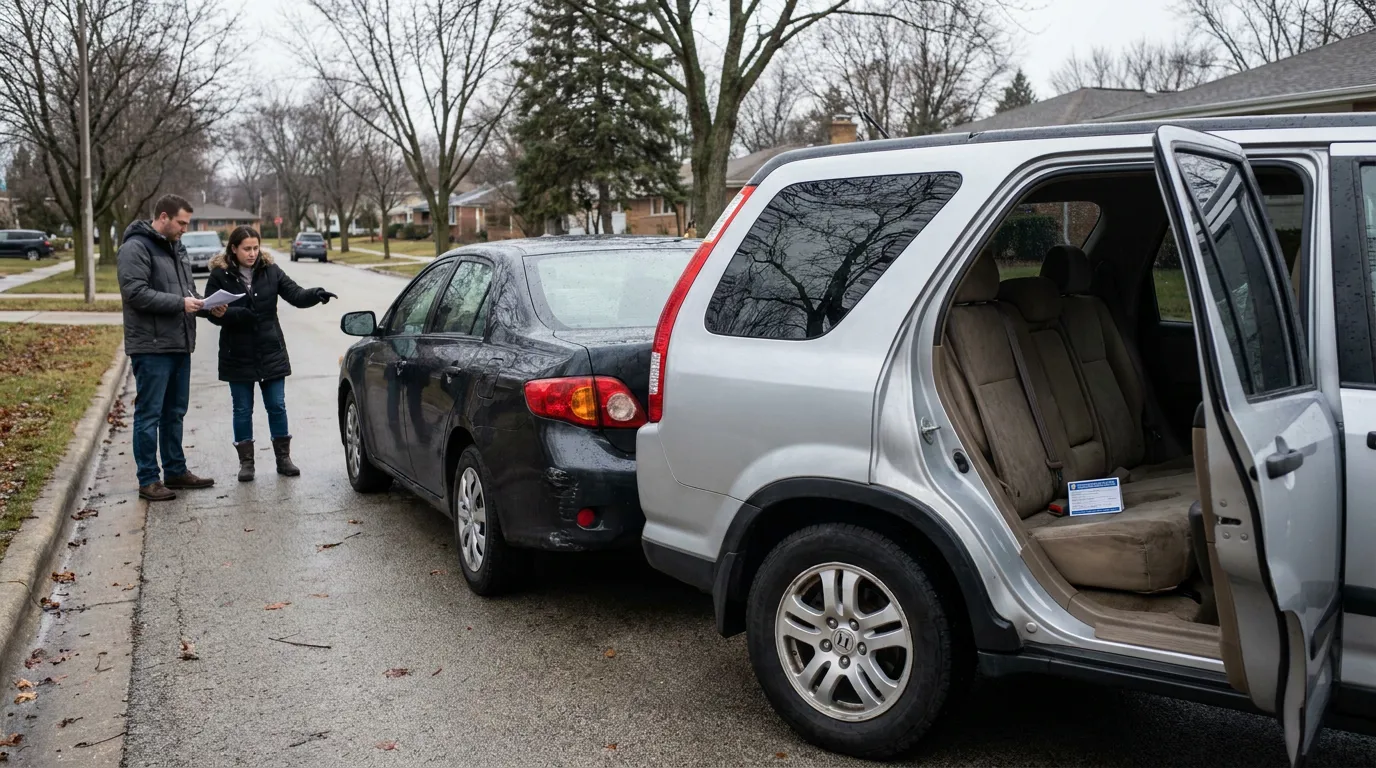
Can You File an Insurance Claim Without a Police Report After a Crash?
Yes, you can file an insurance claim without a police report in Illinois, because no statute makes an accident report a prerequisite to a valid auto claim. Illinois auto insurance law conditions coverage on the fact of a covered crash and policy terms, not on whether officers documented the scene. For example, rideshare coverage under 625 ILCS 57/10(b)(1) includes at least $50,000 for death or personal injury per person, $100,000 per incident, and $25,000 for property damage, while general auto liability minimums under 625 ILCS 5/7-203 are $25,000 per person, $50,000 per accident, and $20,000 for property damage. Coverage is triggered by the crash and policy language, not by a police report.
A police report is helpful evidence rather than a legal requirement. It can corroborate events, but it is only one input an adjuster may weigh. Understanding that a report is not the deciding factor positions you to insist your denied claim be evaluated on actual merits.
💡 Pro Tip: Even without an official report, preserve your own evidence early. Photos of the vehicles, the scene, visible injuries, and contact information for witnesses can serve many of the same functions an adjuster looks for in a report.
How an Illinois Adjuster Actually Determines Fault
An insurance adjuster in Illinois determines fault based on its own assessment of negligence, not solely on a police report. The adjuster makes an offer based on what it believes to be the negligence of its insured. To reach that conclusion, an adjuster interviews involved parties and witnesses, and may review the accident report as one optional input. The report is supporting documentation, not the trigger for coverage.
Fault in Illinois is assigned as a percentage to each party. When an injured victim was partially at fault, a court may assign a percentage to both parties. If a court assigns 60% fault to the defendant and 40% to the plaintiff, the plaintiff recovers only 60% of damages. An adjuster can reduce or contest a payout based on your alleged share of responsibility, regardless of whether a report exists.
Why Documentation Still Strengthens Your Position
Strong documentation makes an adjuster’s job of contesting your claim much harder. Claims supported by medical records, photographs, and consistent witness statements face fewer credibility challenges. If you are researching whether an Illinois car accident claim can be filed without a police report, gathering alternative proof early is one of the most valuable steps you can take.
💡 Pro Tip: Seek medical care promptly even if injuries seem minor. A documented treatment timeline connects your injuries to the crash and undercuts an adjuster’s argument that a gap in care means your injuries were unrelated.
Comparative Negligence and When an Insurer May Deny Payment
Illinois follows modified comparative negligence, which gives insurers a fault-based reason to deny that has nothing to do with a police report. Under 735 ILCS 5/2-1116, an injured party may recover damages only if he or she is not more than 50% at fault. An insurer may decline payment if it believes its insured was not more than 50% at fault. Understanding the state’s modified comparative negligence rule is central to any claim denial in Illinois.
Comparative negligence reduces the damages a plaintiff can recover according to each party’s degree of negligence. The Illinois version bars recovery once a plaintiff is more than 50% at fault. Fault apportionment, not report paperwork, drives most car accident claim outcomes in Illinois.
Illinois law also limits when an insurer may refuse or condition a claim. For certain coverage, the statute provides that coverage shall not be dependent on a personal automobile insurance policy first denying a claim, and the insurer has a duty to defend and indemnify its insured under 625 ILCS 57/10(c)(3)-(4). Illinois scrutinizes the grounds for denial rather than treating missing paperwork as an automatic basis to walk away.
| Type of Claim | General Illinois Deadline | Governing Statute |
|---|---|---|
| Personal injury | 2 years | 735 ILCS 5/13-202 |
| Property damage | 5 years | 735 ILCS 5/13-205 |
| Recovery bar (fault) | More than 50% at fault | 735 ILCS 5/2-1116 |
Deadlines That Govern Your Right to Sue
Your legal right to recover is governed by statutory deadlines, not by whether a police report exists. Illinois sets a two-year limitations period for personal injury actions under the state’s two-year injury filing deadline in 735 ILCS 5/13-202. Most Illinois personal injury claims must be filed within two years of the injury. An adjuster’s internal decision to deny for a missing report is separate from your underlying right to file suit within the limitations window.
Property damage claims, such as vehicle repairs after a crash, carry a longer window of five years under 735 ILCS 5/13-205. This gives claimants substantial time to negotiate with an insurer or file suit even without a report. Exceptions to these deadlines, including tolling or discovery-based extensions, are interpreted narrowly by courts and do not apply automatically. Treat the standard deadlines as firm and confirm your specific timeline with counsel.
💡 Pro Tip: Civil filing deadlines are distinct from any administrative complaint process. Do not assume that filing a complaint with a state agency pauses or replaces your two-year deadline to file a lawsuit.
What to Do If an Adjuster Denies Your Claim
A claimant who disagrees with an adjuster’s fault or denial determination has several avenues of recourse. You are not bound by the first answer, and courts make the final determination of comparative negligence if settlement cannot be reached. Illinois treats a pattern of failing to meet claim-handling requirements as an improper claims practice under 215 ILCS 5/154.5 and 154.6, though courts have held those provisions do not create a private cause of action. Your practical options include:
- Negotiating directly with the adjuster and providing additional evidence
- Filing a complaint with the Illinois Department of Insurance, which may contact the insurer and request a review
- Pursuing litigation, where a court makes the ultimate decision on comparative negligence
Because outcomes depend heavily on specific facts, guidance from a knowledgeable advocate can be decisive. A firm respected for handling injury cases can help you assemble proof, respond to lowball offers, and escalate wrongful denials. If you were hurt in a crash, a Chicago car accident attorney can review whether an insurer has treated your no police report Illinois claim fairly.
💡 Pro Tip: Keep every written communication from the adjuster. A denial letter that cites a missing report rather than a fault-based reason can be useful evidence if you later challenge the decision.
Frequently Asked Questions
-
Can an insurance adjuster deny my claim only because there is no police report?
Generally, an adjuster should not deny a valid claim solely because no report exists. No Illinois statute makes a report a condition of coverage. Adjusters determine fault by reviewing witnesses, statements, and evidence. A denial based only on missing paperwork may warrant closer review.
-
How long do I have to file an Illinois car accident claim?
Most personal injury actions must be filed within two years under 735 ILCS 5/13-202. Property damage claims allow five years under 735 ILCS 5/13-205. Exceptions are applied narrowly, so confirm your timeline early.
-
Does being partly at fault stop my recovery?
Not necessarily, because Illinois uses modified comparative negligence under 735 ILCS 5/2-1116. You may recover only if you are not more than 50% at fault, and damages are reduced by your percentage of fault. Final apportionment can be decided by a court.
-
What can I do if I believe a denial was unfair?
You can negotiate, file a complaint with the Illinois Department of Insurance, or pursue litigation. The agency may ask the insurer to review its determination, and courts make the final call on comparative negligence.
-
Is a police report ever legally required to recover?
A report is helpful evidence but generally not a statutory prerequisite to a valid Illinois auto claim. Coverage depends on a covered crash and policy terms. Adjusters may weigh many sources of proof beyond a report.
Protecting Your Claim Even Without a Report
The absence of a police report rarely dictates whether an Illinois car accident claim survives. What matters is fault apportionment under modified comparative negligence, compliance with applicable filing deadlines, and the strength of your supporting evidence. Adjusters cannot arbitrarily deny valid claims, and Illinois law provides both agency and court avenues to challenge questionable determinations.
If a denied insurance claim is standing between you and the compensation you need, do not wait to protect your rights. The advocates at PAUL PADDA LAW are ready to review your situation, gather the proof an adjuster respects, and pursue fair recovery. Call 702-366-1888 or connect with our team online to get started with a free, confidential consultation.