
7 Mistakes That Weaken an Illinois Crash Claim Without a Report
Filing a Crash Claim Without a Police Report in Illinois
Key Takeaways: In Illinois, you can generally file an insurance claim without a police report because an insurer’s duty to defend and indemnify exists regardless of whether a report was filed, but the missing report shifts the burden onto you to prove fault and damages. The seven mistakes that most often weaken a no-report crash claim are missing the statute of limitations, assuming one deadline covers every type of claim, admitting fault at the scene, failing to document the crash independently, delaying or skipping medical treatment, overlooking available coverage, and handling negotiations without guidance. Because Illinois uses modified comparative negligence, any added share of blame reduces your recovery and, under 735 ILCS 5/2-1116, you may recover only if your contributory fault is not more than 50% (the statute bars recovery when your fault is more than 50%). Each error is correctable with early attention, careful record-keeping, and prompt medical care. Strong documentation, photos, dashcam footage, witness statements, and medical records, can replace much of what a report would normally capture and protect economic, non-economic, and potential punitive damages. Meeting every applicable deadline and resisting premature settlements gives you the best chance of preserving your claim’s full value.
A missing police report does not automatically end your case, but it can make an Illinois crash claim far harder to prove. Many injured drivers and passengers ask, "can you file an insurance claim without a police report?" The short answer is generally yes, because Illinois insurers owe a duty to defend and indemnify regardless of whether a report was filed. The catch is that the absence of an official report places more pressure on you to document the crash, prove the other driver’s negligence, and protect the value of your damages.
If you were hurt in a wreck and never received a police report, you still have options. The legal team at PAUL PADDA LAW helps injured Illinois clients gather evidence and challenge unfair denials. Call 702-366-1888 or reach out through our contact page to discuss your situation today.
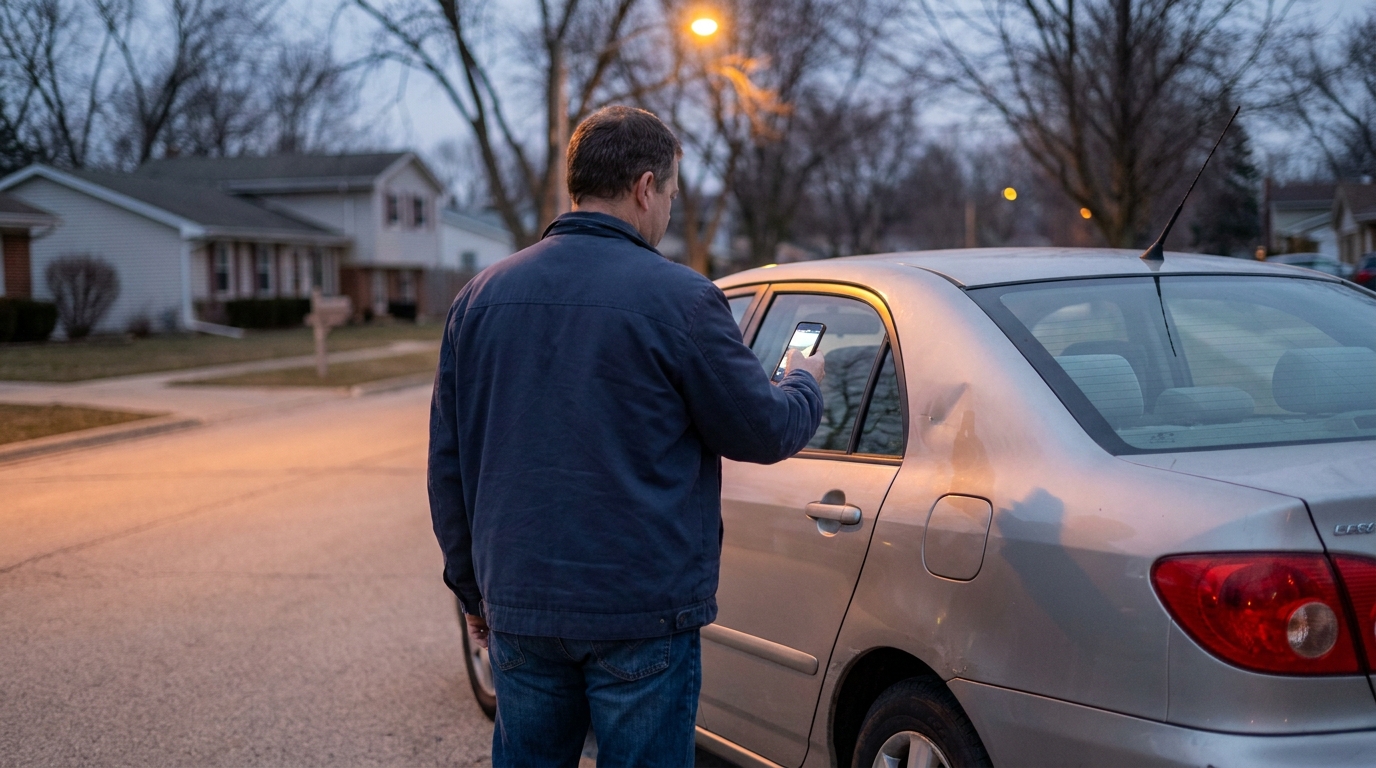
Can You File an Insurance Claim Without a Police Report?
Yes, you can generally file an insurance claim without a police report in Illinois, though doing so changes how you must build your case. Illinois requires minimum auto liability coverage for every driver, and an insurer’s obligations exist whether or not a report was created. For rideshare drivers, 625 ILCS 57/10 sets coverage at $50,000 per person and $100,000 per incident for injury during the app-on period, rising to $1,000,000 in primary coverage once a ride is accepted.
The complication is evidentiary, not procedural. Insurance adjusters rely heavily on documentation to assign fault. The insurance company may interview the involved parties, including witnesses, and it may also review the accident report in order to determine the amount of the offer. Without that report, an insurer may dispute how the crash happened, which is where avoidable filing errors car accident Illinois victims make can quietly weaken an otherwise strong claim.
💡 Pro Tip: Even without a police report, you can create your own record. Photographs, dashcam footage, witness contact information, and a same-day written account of the crash can substitute for many details a report would normally capture.
Seven Errors That Can Weaken Your Illinois Crash Claim
The most damaging mistakes usually involve missed deadlines, poor documentation, and unintentionally accepting blame. Below are the common crash claim errors that frequently surface when no official report exists. Each one is correctable with early attention and careful record-keeping.
1. Missing the Statute of Limitations
Failing to file on time is the single error most likely to destroy a claim entirely. Under Illinois law, 735 ILCS 5/13-202: ‘Actions for damages for an injury to the person… shall be commenced within 2 years next after the cause of action accrued.’ You can review the controlling two-year personal injury deadline directly in the statute. Courts interpret tolling and discovery exceptions narrowly, so you should not assume any extension applies automatically.
2. Assuming One Deadline Covers Everything
Different claims carry different deadlines, and confusing them is a frequent pitfall. Vehicle damage claims have a five-year limit under 735 ILCS 5/13-205, while claims against a local public entity carry only a one-year window under 745 ILCS 10/8-101. Wrongful death claims generally must be filed within two years of death under 740 ILCS 180/2.
| Claim Type | Statute of Limitations | Authority |
|---|---|---|
| Personal injury | 2 years | 735 ILCS 5/13-202 |
| Property damage | 5 years | 735 ILCS 5/13-205 |
| Wrongful death | 2 years from death | 740 ILCS 180/2 |
| Government entity | 1 year | 745 ILCS 10/8-101 |
These civil deadlines are separate from any administrative process an insurer may impose, and you should treat them independently.
3. Admitting Fault at the Scene
Casual apologies or speculation about what happened can be used to increase your share of fault. Illinois applies modified comparative negligence under 735 ILCS 5/2-1116. Under modified comparative negligence, an injured party may recover damages only if he or she is not more than 50% at fault, the statute bars recovery when the plaintiff’s contributory fault is more than 50%, for the injury or damages. Statements made without a report to provide context can later be twisted into apparent admissions.
4. Failing to Document the Crash Independently
Without a report, your own evidence becomes the backbone of the claim. No police report claim mistakes often involve drivers who assume their memory will suffice months later. Photographs, witness statements, and medical records help establish both negligence and causation when the official record is absent.
💡 Pro Tip: Seek medical attention promptly even if you feel fine. A documented treatment timeline links your injuries to the crash and reduces an insurer’s ability to argue your harm came from something else.
5. Delaying or Skipping Medical Treatment
Gaps in treatment give insurers an opening to question whether the crash actually caused your injuries. This is one of the weak accident claim Illinois patterns adjusters look for. Consistent care creates a clear chain between the collision and your damages, which matters more when no report corroborates the impact.
6. Overlooking Available Coverage
Many claimants never identify all the policies that could apply, especially in rideshare crashes. Illinois requires uninsured and underinsured motorist coverage for rideshare passengers. 625 ILCS 57/10(c)(2): ‘Insurance coverage…shall also provide for uninsured motorist coverage and underinsured motorist coverage in the amount of $50,000 from the moment a passenger enters the vehicle of a participating TNC driver until the passenger exits the vehicle.’ To use this coverage, you must still show the crash occurred and that the other driver was uninsured or underinsured.
7. Handling Negotiations Without Guidance
Accepting a quick settlement before understanding your full damages is a costly error. Insurance claim mistakes Illinois victims regret often involve early offers that ignore future medical costs or lost earning capacity. If a settlement cannot be reached, the courts make the final determination of comparative negligence.
💡 Pro Tip: Keep a running file of every expense and missed workday. Detailed records make it harder for an adjuster to undervalue economic losses that accumulate over time.
Damages You Could Lose by Making These Mistakes
Filing errors put real money at risk because Illinois allows recovery across several categories. An injured person may pursue both economic and non-economic damages, and in appropriate cases, punitive damages. These categories are generally recognized in Illinois personal injury actions, though punitive damages are available only in narrow, fact-specific circumstances and are not recoverable in ordinary negligence claims.
- Economic damages: medical expenses, rehabilitation costs, lost productivity, absenteeism, and other financial losses.
- Non-economic damages: pain and suffering, emotional distress, disfigurement, and loss of enjoyment of life.
- Punitive damages: available only in limited, fact-specific circumstances.
Each category depends on proof, and that is precisely what filing errors undermine. When you cannot document the crash properly, an insurer may dispute causation and reduce the amount it is willing to pay. Strong records protect every dollar you may be entitled to recover.
How Illinois Comparative Fault Magnifies Filing Errors
Illinois comparative fault rules mean that any perceived increase in your blame directly shrinks your recovery. Under 735 ILCS 5/2-1116, damages are reduced in proportion to your share of fault, and a plaintiff may be barred entirely if his or her fault meets the statutory threshold, namely, when the plaintiff’s contributory fault is more than 50%. This is why Illinois crash claim pitfalls connected to documentation can be so financially significant.
Without a report establishing the other driver’s negligence, opposing counsel may argue a higher percentage against you. That argument can cut a recovery substantially or eliminate it. Working with an experienced car accidents in Illinois lawyer can help counter inflated fault allegations with organized evidence.
💡 Pro Tip: Ask any witnesses for written statements as soon as possible. Memories fade, and an early account can be decisive when fault is contested under comparative negligence.
Frequently Asked Questions
1. Can you file an insurance claim without a police report after an Illinois crash?
Generally, yes. An insurer’s duty to defend and indemnify exists regardless of whether a report was filed. You will, however, need other evidence to prove how the crash occurred and who was at fault.
2. What is the deadline to file a personal injury claim in Illinois?
Most personal injury claims must be filed within two years of the date the cause of action accrued under 735 ILCS 5/13-202. Different deadlines apply to property damage, wrongful death, and claims against government entities. Courts apply exceptions narrowly, so timely action matters.
3. Will admitting partial fault stop me from recovering anything?
Not necessarily. Under 735 ILCS 5/2-1116, you may recover only if your fault is not more than 50% (the statute bars recovery when your contributory fault is more than 50%), though your damages are reduced proportionally. Recovery is barred once your contributory fault meets the statutory threshold.
4. What evidence helps replace a missing police report?
Photographs, dashcam video, medical records, and witness statements can fill the gap. A prompt written account of the crash also helps. The stronger your documentation, the harder it is for an insurer to dispute liability.
5. Does a rideshare crash change my available coverage?
Often, yes. Illinois requires specific liability and UM/UIM coverage for rideshare situations under 625 ILCS 57/10. Identifying the correct policy is essential to recovering the full amount you may be owed.
Protecting Your Claim After a Crash
Avoiding these mistakes crash claim no report Illinois drivers commonly make can preserve both your right to recover and the value of your case. A missing police report raises the stakes, but it does not have to be fatal to your claim when you document the crash, meet every applicable deadline, and resist accepting blame or a premature settlement. Outcomes always depend on the specific facts, so careful, early action is your strongest protection. If you want to understand your options, learn more about pursuing a claim without a police report in Illinois.
You do not have to navigate insurer disputes alone. The team at PAUL PADDA LAW is ready to review your crash, gather evidence, and advocate for the compensation you may deserve. Call 702-366-1888 or contact us now to get started.