
What Happens If You’re in an Uber or Lyft Accident on the Las Vegas Strip?
If you are involved in an Uber or Lyft accident on the Las Vegas Strip, financial recovery usually comes through the rideshare company’s commercial insurance. Rideshare passengers are almost always protected by Uber or Lyft’s $1,000,000 liability policy, while other motorists or pedestrians are covered based on whether the rideshare driver was logged into the app, en route to a pickup, or actively carrying a passenger.
Las Vegas Boulevard is one of the busiest corridors in the country. Between heavy traffic, frequent casino drop-offs, and constant distractions, rideshare collisions happen frequently on the Strip. Navigating the aftermath of a rideshare crash can feel confusing, but understanding how Nevada law applies to these situations will help protect your health and legal rights.
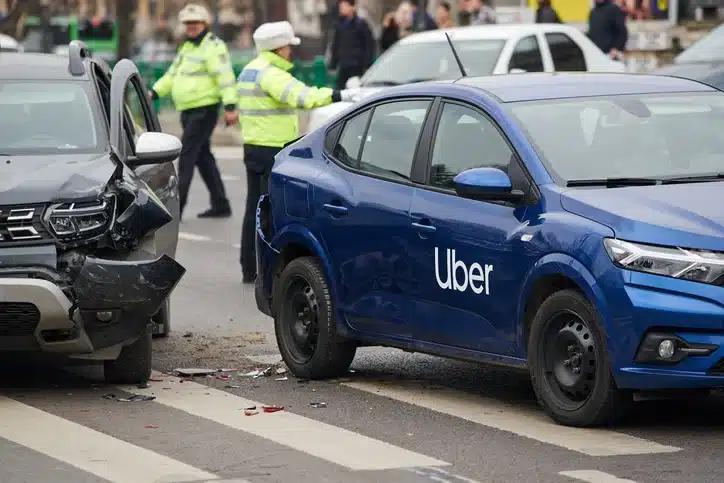
Immediate Steps to Take After a Strip Rideshare Crash
Taking quick, deliberate action following a collision helps safeguard your health and creates a clear record for any future financial claims. To ensure that you and your claim are protected, take the following steps after a rideshare crash:
● Call 911 immediately: Request medical assistance and ensure the Las Vegas Metropolitan Police Department (LVMPD) responds to write an official traffic collision report.
● Get medical attention: Go to an emergency room or urgent care center right away, even if you feel fine. Adrenaline often masks serious injuries like whiplash, concussions, or internal trauma.
● Document the scene: Take clear photos and videos of all vehicle damage, license plates, street signs, casino landmarks, and the rideshare app screen showing the status of the trip.
● Gather contact details: Collect names, phone numbers, driver’s license numbers, and insurance information from all involved drivers, as well as contact details from any witnesses.
● Report the crash carefully: Notify the rideshare company through the app, but avoid giving detailed recorded statements to insurance adjusters until you understand your legal options.
Understanding Rideshare Insurance Coverage in Nevada
Under Nevada Revised Statutes Chapter 706A, transportation network companies like Uber and Lyft must maintain specific levels of liability insurance coverage. In the event of a collision, the available coverage varies depending on what the driver was doing at the moment the collision occurred.
When the App Is Turned Off
If a rideshare driver causes a crash while the app is completely turned off, they are considered an ordinary motorist. In this scenario, the driver’s personal auto insurance policy is primary, and the rideshare company bears no financial responsibility for the collision.
When the Driver Is Waiting for a Ride Request
When a driver logs into the app and is available to accept rides, but has not yet accepted one, contingent insurance applies. If the driver’s personal insurance policy denies coverage, the rideshare company provides coverage up to:
● $50,000 for bodily injury per person
● $100,000 for total bodily injury per accident
● $25,000 for property damage per accident
When a Ride Is Accepted, or a Passenger is Onboard
From the moment a driver accepts a ride request until the passenger is safely dropped off, Uber and Lyft provide up to $1,000,000 in primary commercial liability coverage. This policy covers injured passengers, as well as third-party drivers, bicyclists, and pedestrians if the rideshare driver was at fault. It also includes contingent uninsured and underinsured motorist coverage.
Who Can Be Held Liable for Your Injuries?
Determining liability on the Las Vegas Strip requires evaluating the actions of everyone involved in the incident, including:
● The rideshare driver: If the driver was speeding, making an illegal turn into a valet lane, or distracted by their navigation screen, they can be held liable for negligence.
● Third-party drivers: Another motorist may have caused the crash by running a red light or rear-ending the rideshare vehicle. In these cases, the driver’s insurance is responsible.
● Commercial maintenance providers: If a mechanical failure contributed to the crash, liability might extend to third-party maintenance shops or vehicle manufacturers.
● Property or resort owners: Poorly designed valet entrances, obscured traffic signs, or hazardous road conditions on private casino property can sometimes establish premises liability.
Unique Challenges of Las Vegas Strip Rideshare Accidents
Accidents along Las Vegas Boulevard present distinct challenges that do not typically arise in standard traffic collisions. The environment itself complicates evidence gathering and claims management.
The Strip features constant stop-and-go traffic, sudden lane changes, and dense pedestrian zones. Drivers frequently stop in non-designated areas to pick up or discharge passengers near popular resorts like the Bellagio, MGM Grand, or Caesars Palace. These actions create significant hazards for surrounding traffic.
Furthermore, many people involved in Strip accidents are out-of-state tourists. Whether you were visiting Las Vegas or were struck by an out-of-state visitor, handling cross-border insurance claims requires managing different state policies and jurisdictional rules. Resort surveillance cameras and municipal traffic feeds often capture these incidents, making prompt evidence collection essential.
How the Nevada Claims Process Works
Recovering compensation after a rideshare accident in Las Vegas involves navigating Nevada civil law procedures.
Under Nevada Revised Statutes 41.141, the state follows a modified comparative negligence rule. This means you can recover financial compensation as long as you are less than 51 percent responsible for the accident. However, your financial recovery will be reduced by your assigned percentage of fault.
Building a claim involves compiling medical records, gathering telemetry data from the rideshare app, interviewing witnesses, and reviewing police reports. Reaching a fair resolution requires establishing the full extent of your medical bills, lost wages, and future treatment requirements before negotiating with corporate insurers.
Frequently Asked Questions
What if I were a passenger in the Uber or Lyft vehicle during the crash?
As a rideshare passenger, you are rarely at fault for a collision. You are covered under Uber or Lyft’s $1,000,000 commercial liability policy, regardless of whether the crash was caused by your rideshare driver or another motorist.
Do I report the accident directly through the Uber or Lyft app?
Yes, you should report the crash through the app to create an official record of the incident. However, stick strictly to basic facts such as the time, location, and vehicles involved. Avoid offering opinions or detailed statements about injuries until you consult a lawyer.
How long do I have to file a rideshare accident claim in Nevada?
Under Nevada Revised Statutes 11.190(4)(e), the statute of limitations for personal injury claims is two years from the date of the accident. If you do not initiate a lawsuit within this two-year window, you lose your right to seek financial recovery.
Will my own auto insurance cover an Uber or Lyft accident?
Your personal auto insurance policy may provide coverage if you carry MedPay benefits or medical expense coverage. If you were driving your own car and you were hit by an uninsured rideshare driver, your own uninsured motorist policy may also apply.
Contact Paul Padda Law for Help
Navigating a rideshare claim after an accident on the Las Vegas Strip can feel overwhelming, especially when dealing with corporate insurance companies. You do not have to handle the process on your own.
If you have questions about an Uber or Lyft accident or want to understand your legal rights under Nevada law, reaching out early helps protect vital evidence and preserves your options. Call Paul Padda Law today at 702-707-7000 to speak with our team about your situation.