
Should I Accept the Insurance Company’s First Settlement Offer in Las Vegas?
Understanding the Reality of Initial Settlement Offers
Being involved in an accident is a deeply disruptive and chaotic experience. Between managing painful medical treatments, dealing with vehicle repairs, and worrying about missed time at work, the pressure can build very quickly. When an insurance adjuster calls with a settlement offer shortly after your accident, it is completely natural to feel a sudden sense of relief. A quick settlement check seems like the easiest way to put the ordeal behind you and regain control of your life.
However, accepting that very first offer is rarely in your best interest. The initial number an insurance company puts on the table is rarely a true reflection of what your case is legally worth. It is simply the starting point of a much larger negotiation. Understanding how insurance companies operate and how the law views your damages is the most effective way to protect your physical and financial future.
The True Cost of Your Accident: Why Early Offers Fall Short
In the immediate aftermath of an accident, the full scope of your injuries is often unclear. Healing is not always a linear process. What seems like minor soreness in the days following a crash could eventually develop into a severe condition requiring physical therapy, specialized care, or even surgery.
Assessing Current and Future Medical Needs
When an insurance company makes an offer within days of an accident, they are banking on the fact that you have not yet discovered the full extent of your medical needs. Nevada law allows victims to seek compensation for both past medical bills and future medical expenses. If you accept a settlement before you have reached maximum medical improvement, you forfeit your right to ask for more money later if your condition unexpectedly worsens.
Factoring in Lost Wages and Hidden Expenses
A fair settlement must also thoroughly account for the time you miss from work and any diminished earning capacity if you cannot return to your previous job. Initial offers frequently completely ignore these long-term financial impacts. They also tend to severely undervalue non-economic damages, such as physical pain, emotional distress, and the loss of enjoyment of life. From a judicial standpoint, a court evaluates the totality of how an injury impacts a person’s life over time, not just the initial emergency room bill. A proper settlement should reflect this comprehensive standard.
How Insurance Companies Approach Settlement Negotiations
It is vital to remember that insurance companies are businesses. Their primary obligation is to their shareholders and their own profit margins, not to injured claimants. Their ultimate goal is to resolve claims as quickly and inexpensively as the law allows.
Protecting Their Bottom Line
Insurance adjusters are highly trained negotiators who use sophisticated software and internal metrics to determine the lowest possible payout they can offer while still tempting you to sign away your rights. They know that accident victims are often under immense financial stress and rely on the fact that you might jump at the first sign of financial relief without realizing the true value of your claim.
Using Time and Stress as Leverage
Insurance companies understand the immense leverage they hold over an injured person. They know the legal process can seem intimidating and exhausting. Sometimes, they may delay communications, ask repetitive questions, or request redundant paperwork, hoping you will eventually accept a low offer simply out of frustration. Fortunately, Nevada has specific statutes, such as NRS 686A.310, which outline unfair claims settlement practices and require insurers to act in good faith. Knowing these rules helps level the playing field and prevents companies from taking advantage of your situation.
What Happens if You Accept the First Offer?
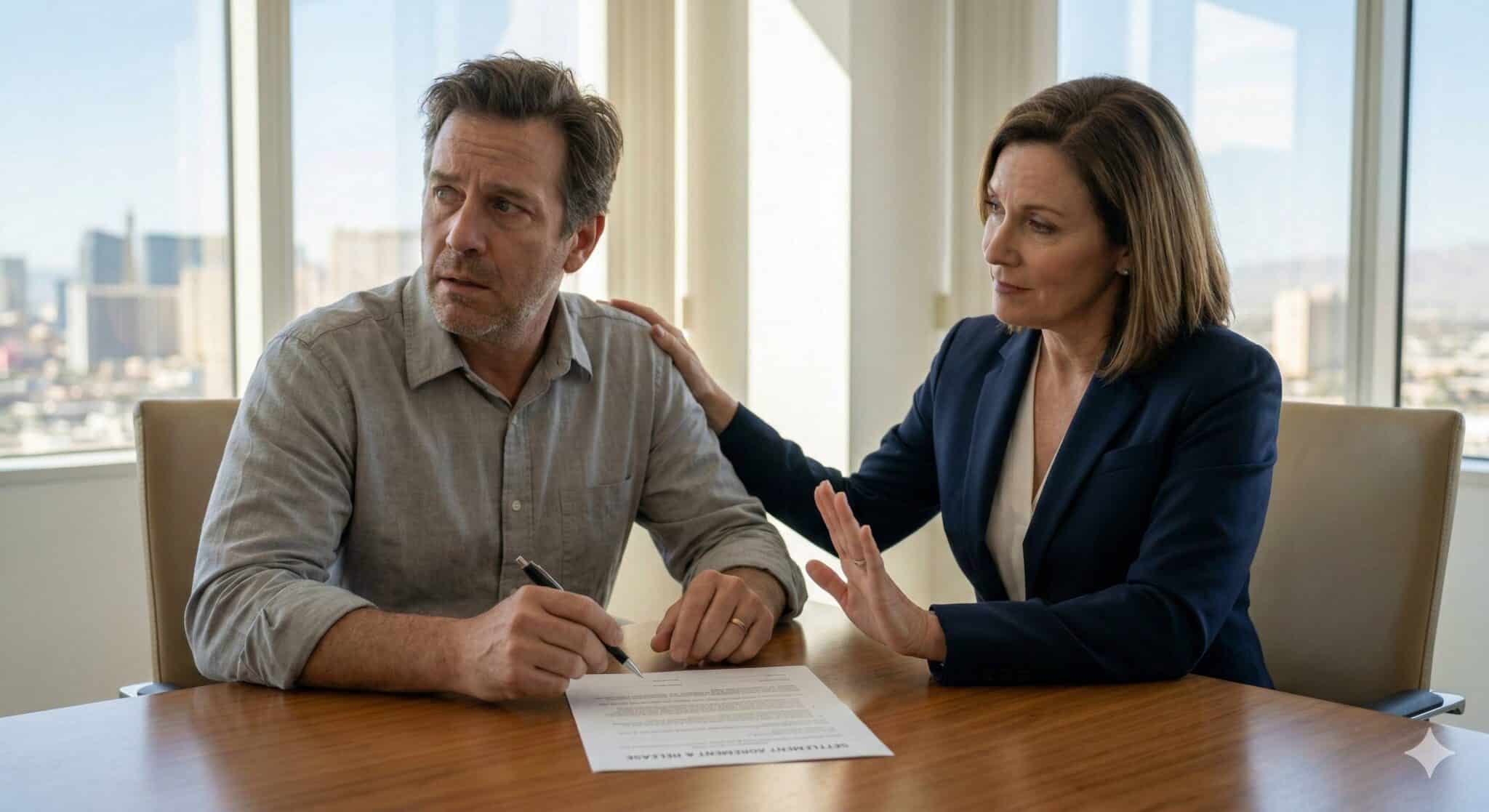
When you agree to a settlement, you are required to sign a release of liability. This is a legally binding document that permanently and completely closes your case against the at-fault party and their insurance company.
Once that document is signed, you cannot go back and ask for more money. Even if you require an unexpected and costly surgery a year later, or you discover that your property damage was far worse than initially estimated, the finality of a settlement release is absolute. This strict legal reality is exactly why thorough calculation, comprehensive medical evaluations, and patience are essential before putting your signature on any agreement.
The Power of Pushing Back: Your Right to Negotiate
You have the absolute right to reject an initial offer and demand a figure that accurately reflects your physical and financial losses. Rejecting an offer does not mean you lose the opportunity to settle the case. It simply moves the conversation into a more serious, formal negotiation phase.
By presenting well-documented evidence of your medical bills, lost wages, and out-of-pocket expenses, you force the insurance company to evaluate the claim based on undeniable facts rather than their internal profit targets. Presenting a strong counteroffer shows the insurance company that you understand the true value of your claim. It signals that you are prepared to take the necessary legal steps to secure a fair outcome, up to and including filing a formal lawsuit within the two-year timeframe set by the Nevada statute of limitations.
Frequently Asked Questions
Can the insurance company take back their first offer if I say no?
Technically, an offer can be withdrawn once it is rejected. However, in standard practice, this is incredibly rare. The initial offer is widely understood to be a starting point, and insurance companies fully expect a counteroffer. Their primary goal is still to settle the case and avoid the unpredictable costs of a jury trial.
How long does the settlement negotiation process usually take in Nevada?
There is no single timeline for a personal injury claim. A straightforward case with clear liability and complete medical records might settle in a few months. Cases involving severe injuries, disputed fault, or extensive future medical care can take significantly longer to resolve. The focus should always be on reaching a fair resolution rather than a fast one.
What happens if the insurance company refuses to offer a fair amount?
If negotiations stall and the insurer refuses to make a reasonable offer, you have the right to file a personal injury lawsuit. Filing a lawsuit moves the dispute into the Clark County court system, allowing for formal discovery and potentially a trial. Very often, simply filing a lawsuit motivates the insurance company to return to the negotiating table with a much more realistic and respectful offer.
Taking the Next Steps with Confidence
Making permanent financial decisions about a settlement while you are actively trying to heal can feel incredibly isolating. You do not have to navigate the complex negotiation process on your own. Having a clear understanding of your legal standing can alleviate the anxiety of dealing with aggressive insurance adjusters and ensure your rights remain the central priority.
If you have received an offer from an insurance company and are unsure if it truly covers your damages, we are here to provide honest clarity. Reach out to Paul Padda Law by calling (800) 712-0000 to discuss your situation. We can sit down, review the details together in a calm environment, and help you determine the most sensible path forward for your recovery.