
Are Motorcyclists Automatically at Fault in Las Vegas Accidents? Common Myths Explained
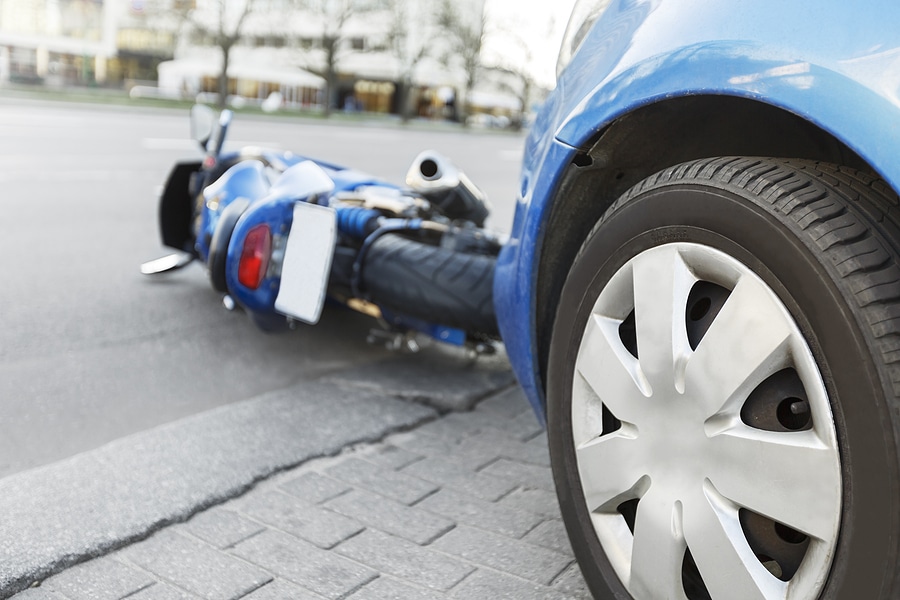
If you were involved in a motorcycle crash, you may feel as though witnesses, police officers, and insurance adjusters immediately judge you to be at fault. They may assume you were speeding, weaving, or taking reckless risks based solely on the fact that you ride a motorcycle. This phenomenon, often called “Biker Bias,” can directly shape how blame is assigned, which can negatively impact a settlement offer from the insurance company. The law in Nevada, however, requires more than stereotypes to determine who was at fault in a crash. Liability is based on negligence and in many common collisions, especially left-turn crashes, the driver of the other vehicle is the party at fault.
The “Reckless” Rider Bias
As a motorcycle enthusiast, you are probably all too aware of the stereotypes people often have about motorcyclists. Those common stereotypes can lead to an unconscious psychological bias in the minds of insurance adjusters and even members of a jury that leads them to see people who ride motorcycles as reckless, risk-takers, and even prone to criminal behavior. As the victim in a motorcycle crash, this “reckless rider” bias can be problematic if it interferes with a determination of negligence. Stereotypes are not evidence of negligence.
Nevada’s Modified Comparative Negligence Rule
To be entitled to compensation for your injuries in a motorcycle crash, you must prove that the other driver’s negligence caused or contributed to the crash. While it is possible that the other driver was 100 percent at fault, it is common for both parties to share some blame in a collision. If your own negligence contributed to the crash, you may still be entitled to recovery damages under Nevada’s modified comparative negligence rule. Under the rule, you can pursue compensation as long as your share of the blame is less than 51 percent. If your own negligence contributed to the collision, however, your settlement or award will be reduced accordingly. For instance, if you were 25 percent responsible because you were speeding, and your damages are valued at $100,000, you would receive $75,000 after a 25 percent reduction.
The “Left-Turn” Reality
Despite the “Biker Bias” that leads people to believe that motorcyclists are reckless drivers, the most common cause of fatal motorcycle accidents is a passenger vehicle failing to yield and turning left in front of a motorcycle. The harsh reality is that other motorists simply do not look for motorcycles on the roadways, frequently leading to preventable, often fatal, collisions.
Lane Splitting and Liability
“Lane splitting” refers to riding between lanes of traffic, typically when traffic is moving slowly or stopped. Under Nevada law, lane splitting is prohibited and may result in a traffic violation citation. If a motorcyclist was engaged in lane splitting at the time of a crash, it can also lead to a presumption of negligence on the part of the rider. That presumption, however, is rebuttable, meaning that you are not automatically 100 percent at fault even if you were lane splitting at the time of a motorcycle crash.
Unfair Police Reports
Unfortunately, stereotypes about motorcycle riders can impact an injury claim very early on in the process in the form of unfair police reports. Imagine, for example, that you are involved in a motorcycle accident that renders you unconscious for some time following the collision. Instead of waiting to take your statement and hear your side of the story, the police may file an accident report based solely on the other driver’s statement. The police officer’s own unconscious “Biker Bias” may increase the likelihood that the officer will see you as the at-fault party and file the report without even questioning you about what happened.
The Helmet Defense
Like many states, the State of Nevada has a helmet law requiring all riders to wear a securely fastened, U.S. Department of Transportation (DOT)-compliant helmet. If you were not wearing a helmet at the time of a motorcycle crash, the insurance adjuster may try to infer that the absence of a helmet is evidence of your negligence. Failing to wear a helmet, however, is not typically relevant to the issue of liability for the crash. It may, however, be relevant to the issue of the severity of your injuries. In other words, failing to wear a helmet did not cause the crash to happen, but it may have contributed to how seriously you were injured.
Evidence that Overrides Bias
To successfully pursue a motorcycle crash injury lawsuit, it is often necessary to overcome the Biker Bias and disprove false claims or speeding or reckless driving. To do that, the team at Paul Padda Law often uses a variety of evidence to scientifically reconstruct the collision, including GoPro video, skid mark analysis, and black box data.
Contact Paul Padda Law
Fault (negligence) in a Nevada motorcycle crash is defined by law and based on physics and facts, not on stereotypes and biases. If you were injured in a motorcycle collision, the team at Paul Padda Law will conduct a thorough professional investigation to prevent the Biker Bias from negatively impacting your right to full and fair compensation. Call the Recovery Team at Paul Padda Law immediately so we can secure evidence before bias sets the narrative.