
What Is a Retained Surgical Sponge Malpractice Claim in Illinois?
When a Surgical Item Stays Behind: Understanding Illinois Law on Retained Sponges
Key Takeaways: A retained surgical sponge malpractice claim in Illinois is a medical negligence case arising when gauze, laparotomy pads, or similar soft goods are left inside a patient’s body after the incision is closed, often causing infection, abscess, obstruction, or the need for corrective surgery. These claims usually stem from breakdowns in manual counting and communication, and typically hinge on operative count sheets, nursing notes, operative reports, and postoperative imaging. Plaintiffs generally must prove a deviation from the standard of care and causation, and defendants may include the surgeon, assistants, nurses, and the hospital under direct or vicarious liability. Illinois also generally requires a certificate of merit under 735 ILCS 5/2-622, though the statute allows a 90-day extension in defined circumstances, and noncompliance may serve as grounds for dismissal that courts often allow plaintiffs to cure by amendment. Timing is critical, since the two-year limitations period and four-year repose framework under 735 ILCS 5/13-212 may apply, and any foreign-object exception to repose is narrow and strictly construed. Potentially recoverable damages may include economic and non-economic losses, though punitive damages are generally barred in healing art malpractice actions under 735 ILCS 5/2-1115.
A retained surgical sponge malpractice claim is a medical negligence case brought when a surgical team leaves gauze, laparotomy pads, or similar soft goods inside a patient’s body after closing the incision. Illinois patients may face infection, abscess formation, bowel obstruction, and additional surgery to remove the item. Because a retained sponge is widely classified as a preventable "never event," these cases often center on whether the operative team followed accepted counting protocols and documented them accurately. That classification is a clinical designation, however, and does not by itself establish legal liability.
If you or a family member in Chicago or Cook County is dealing with the aftermath of a retained foreign object, the team at PAUL PADDA LAW is available to review the medical records and explain your options. Call 702-366-1888 or contact us now to discuss what happened.
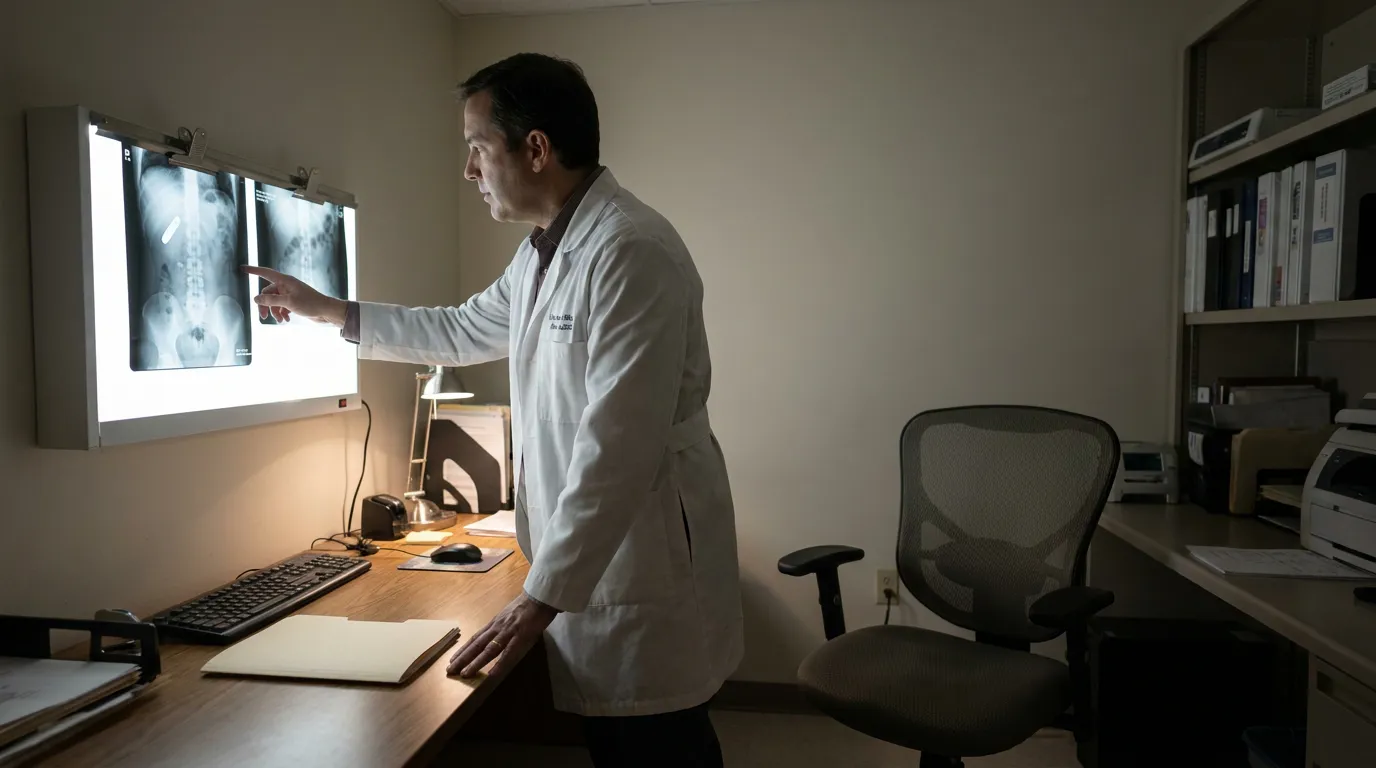
Why Sponges Get Left Behind in the Operating Room
Retained surgical items often result from breakdowns in counting and communication rather than a single careless act. Federal patient safety research on the prevention of retained surgical items identifies manual sponge, needle, and instrument counts as the conventional method hospitals use to track materials during a procedure. When counts are rushed, skipped, or reconciled incorrectly, an item can remain inside the surgical cavity.
Certain circumstances may raise the risk of a retained item, including emergency operations, unexpected intraoperative changes, and higher patient body mass index. These conditions do not excuse a retained sponge, but they may help explain how the error occurred and frame both the standard of care and causation in litigation.
Technology has changed what a reasonable hospital may be expected to do. Evidence reviews have evaluated tools such as radiofrequency detection systems and bar-coded sponges as supplements to manual counting. Their availability can matter when arguing an incident was preventable, though Illinois law does not mandate any specific technology, and the standard of care remains fact-dependent, generally requiring testimony from qualified physicians and operating room nurses.
Common Injuries From a Retained Sponge
- Localized infection, abscess, or sepsis
- Gossypiboma, a mass formed by tissue reacting to retained cotton material
- Adhesions, bowel perforation, or obstruction
- Chronic pain, fistula formation, and the need for corrective surgery
- In severe cases, organ damage or death
Proving a Retained Surgical Sponge Malpractice Claim in Illinois
Illinois plaintiffs generally must show a deviation from the standard of care and that the deviation caused injury. The operative record often supplies significant evidence: the sponge count sheet, circulating nurse notes, the surgeon’s dictated operative report, and postoperative imaging. Where counts were documented as "correct" yet an item was later found on a CT scan, that contradiction may become central to the case. Illinois does not apply strict liability to retained objects, but expert testimony is not always required — Illinois courts recognize the "common knowledge" doctrine and res ipsa loquitur, which can allow a jury to infer negligence without expert testimony on the standard of care in retained sponge cases.
Identifying the correct defendants requires careful analysis. Potential defendants may include the surgeon, surgical assistants, circulating and scrub nurses, and the hospital itself under direct or vicarious liability, and courts may consider whether a physician was an actual agent, apparent agent, or independent contractor of the facility.
Internal hospital investigations are frequently unavailable to patients. Under the Medical Studies Act, 735 ILCS 5/8-2101 et seq., information generated by hospital committees for internal quality control is generally privileged, and the Medical Practice Act of 1987, 225 ILCS 60/5, separately extends civil immunity to committee members absent willful or wanton misconduct. That privilege is not unlimited: information generated before peer review begins or contained in the ordinary patient record generally remains discoverable. This is why a hospital’s root cause analysis is typically protected, and plaintiffs generally build cases from the clinical record and physician testimony instead.
The Certificate of Merit Requirement Illinois Plaintiffs Cannot Skip
Illinois generally requires a screening affidavit before a medical malpractice complaint may proceed. Under 735 ILCS 5/2-622(a)(1), the plaintiff’s attorney must file an affidavit declaring that a health professional reviewed the facts and determined in a written report that there is reasonable and meritorious cause for filing. This generally applies to retained sponge cases like any other healing art malpractice claim.
The written report must accompany the affidavit, clearly identifying the plaintiff and the reasons for the determination. The statute also allows an affidavit under subsection (a)(2) permitting the report to be filed within 90 days where the limitations period would impair obtaining it. Practically, a qualified reviewer must examine the operative record before or shortly after suit is filed, which is why early consultation matters. The full text of the Illinois certificate of merit statute is available through the General Assembly’s website.
Noncompliance can carry serious consequences. Under 735 ILCS 5/2-622(g), failure to file the required certificate is grounds for dismissal under Section 2-619. Illinois courts have generally held such dismissals are within the trial court’s discretion and often without prejudice, with leave to amend, but relying on a later cure is risky, full compliance at filing is safest.
💡 Pro Tip: Ask your treating physician for the pathology report and operative photographs documenting the removed object. That documentation is often the clearest proof that a foreign body was recovered from your body.
Deadlines That Can End a Case Before It Starts
Illinois generally applies both a statute of limitations and a statute of repose to medical malpractice actions. Under 735 ILCS 5/13-212(a), the general limitations period is two years from when the injured person knew or reasonably should have known of the injury, and in no event may an action be brought more than four years after the act or omission that allegedly caused it.
Retained foreign object cases raise a distinct timing problem. A patient may carry a sponge for years without symptoms, meaning discovery can occur long after repose would otherwise expire. While the four-year repose period under 735 ILCS 5/13-212(a) is strictly applied in most cases, any foreign-object exception is narrow and strictly construed, and no patient should assume such an argument will succeed. Limited doctrines such as fraudulent concealment under 735 ILCS 5/13-215 or a continuing course of negligent treatment may extend the deadline in narrow circumstances, but these too require careful evaluation.
Different rules may apply to minors, wrongful death actions, and claims against public entities. Under 735 ILCS 5/13-212(b), a minor generally has eight years from the act or omission, but not beyond his or her twenty-second birthday, and wrongful death claims are governed by the Wrongful Death Act as informed by Section 13-212. Deadlines and notice requirements for claims involving governmental hospitals can differ substantially from those for private hospitals. Prompt review of the timeline is generally advisable.
| Illinois Timing Consideration | General Rule | Practical Note |
|---|---|---|
| Limitations period | Generally two years from discovery of the injury | Fact-dependent; courts examine what the patient reasonably knew |
| Statute of repose | Generally four years from the act or omission | Any foreign-object exception is narrow and strictly construed; limited doctrines like fraudulent concealment may apply |
| Minors | Generally eight years, not past age 22 | Separate statutory treatment |
| Public entity defendants | Different periods and notice rules may apply | Requires early evaluation |
Preserving the Evidence That Wins Cases
Medical records are often the backbone of a retained sponge Illinois claim. Illinois hospitals must preserve medical records for not less than 10 years under the Hospital Licensing Act, 210 ILCS 85/6.17(c), and that period is extended when an attorney provides written notice that litigation is pending involving a particular patient’s records.
Requesting the right documents matters as much as requesting them early. Operating room count sheets, nursing flow sheets, radiology images and reports, pathology findings on the removed object, and incident timelines may all carry evidentiary weight, subject to any applicable privilege. Patients harmed during anesthesia or other phases of care may also want to review whether a Chicago patient can sue for anesthesia errors in Illinois, since surgical claims sometimes involve overlapping negligence theories.
Illinois also regulates communications after a complaint is served. For actions filed on or after January 1, 2004, after a complaint for healing art malpractice is served upon the hospital or upon its agents or employees, members of a hospital’s medical staff who are not actual or alleged agents, employees, or apparent agents of the hospital generally may not communicate with legal counsel for the hospital or with risk management of the hospital concerning the claim except with patient consent or through discovery authorized by the Code of Civil Procedure or the Supreme Court rules, under 210 ILCS 85/6.17(e-5).
Researching a Surgeon’s Prior Record
Illinois maintains public physician profiles disclosing malpractice history. Under the Patients’ Right to Know Act, 225 ILCS 61/10(6), profiles include medical malpractice court judgments, arbitration awards involving payment, and settlements with payment during the most recent 10 years. The statute cautions that a settlement payment should not be construed as creating a presumption that malpractice occurred, so this information is generally background context rather than admissible proof of negligence.
Damages Available in a Gossypiboma Illinois Claim
Illinois tort law may allow recovery of both economic and non-economic damages in surgical negligence cases. Economic damages may include past and future medical expenses, corrective surgery costs, lost income, and reduced earning capacity. Non-economic damages can include pain and suffering, disfigurement, loss of a normal life, and emotional distress, depending on the evidence presented. Illinois currently has no statutory cap on non-economic malpractice damages, the Illinois Supreme Court having held an earlier cap unconstitutional.
Punitive damages generally face a statutory bar in this context. Under 735 ILCS 5/2-1115, punitive damages are generally not recoverable in any action for healing art or legal malpractice, and while the Wrongful Death Act was amended effective 2023 to permit punitive damages in certain wrongful death actions, that amendment expressly does not apply to healing art malpractice claims. Families pursuing a wrongful death claim after a fatal retained sponge event should understand this limitation from the outset.
Life-care planning may be necessary in catastrophic cases. Where a retained object caused permanent bowel damage, chronic infection, or long-term disability, economists and life-care planners can help quantify future needs. An experienced Chicago surgical error attorney can coordinate those professionals as part of building the damages case.
Frequently Asked Questions
1. How soon after surgery do symptoms of a retained sponge appear?
Symptoms may appear within days or not surface for months or years. Some patients develop fever, pain, or drainage quickly, while others remain asymptomatic until imaging reveals a mass. Timing of discovery can significantly affect filing deadlines, though the four-year repose period generally runs from the surgery itself rather than discovery.
2. Does a retained sponge automatically mean malpractice occurred?
Not automatically. Illinois plaintiffs generally must still establish the standard of care, a deviation from it, and causation. That said, retained items are widely regarded as preventable, and Illinois courts recognize the "common knowledge" doctrine and res ipsa loquitur as applicable in retained sponge cases, which may allow a jury to infer negligence without expert testimony on the standard of care.
3. Can I sue the hospital as well as the surgeon?
In some cases, yes. Liability may extend to the hospital through employment relationships or apparent agency, and nursing staff responsible for counts are frequently hospital employees. The correct structure depends on the specific facts and contracts involved.
4. What happens if the four-year repose period has already passed?
The four-year repose under 735 ILCS 5/13-212(a) is strictly applied in most cases, and any foreign-object exception is narrow and strictly construed, so a late-discovered claim may be barred. Limited doctrines such as fraudulent concealment can occasionally apply, and an attorney should evaluate the full timeline before you conclude a claim is or is not time-barred.
5. Do I need a medical review before filing an Illinois never event claim?
Generally, yes. Section 2-622 requires a reviewing health professional’s written report and an attorney affidavit, subject to the statute’s limited 90-day extension option, and failure to comply may result in dismissal.
Moving Forward After a Preventable Surgical Error
A retained surgical sponge malpractice claim in Illinois combines medical proof with strict procedural requirements. Outcomes generally depend on preserving operative records early, securing a qualified reviewing health professional for the certificate of merit, understanding how the limitations and repose provisions may apply to your discovery date, and building damages evidence that reflects the full scope of harm. Every case turns on its own facts, and outcomes vary.
If a surgical item was left inside you or someone you love, PAUL PADDA LAW is prepared to evaluate your situation and explain the path forward. Reach the firm at 702-366-1888, visit Paul Padda Law online, or schedule a consultation today.
Disclaimer: This content is for informational purposes only and is not legal advice. Every case is unique, and results may vary. Consult an attorney about your specific circumstances.